
Auditory Processing Disorder: When Your Child Hears But Doesn’t Understand
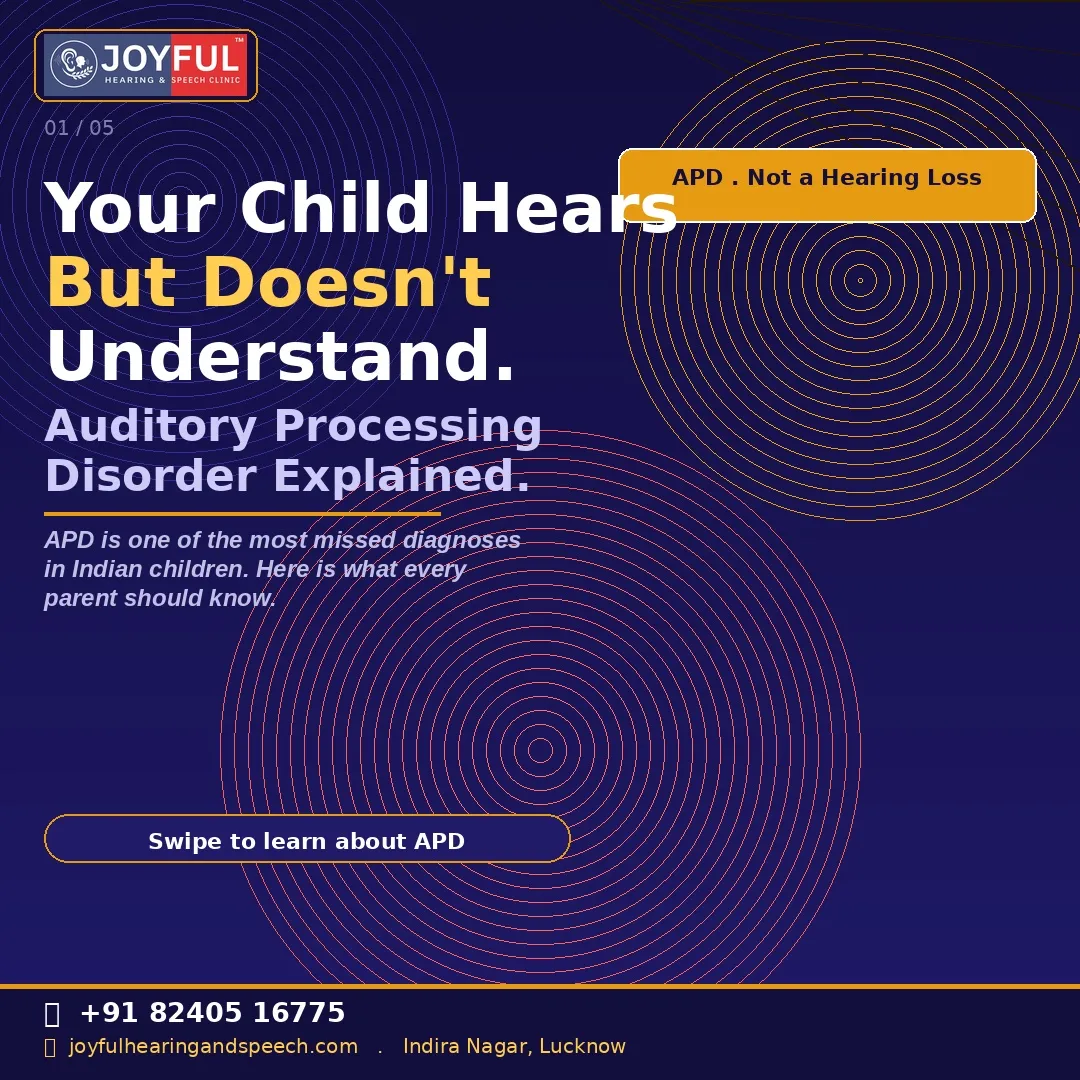
Your child passed their routine hearing test. The doctor confirmed their ears are physically normal. Yet at home and in the classroom, they constantly ask you to repeat instructions, find noisy gatherings overwhelming, struggle with phonics, and mishear words in confusing ways. Teachers may assume they are inattentive or daydreaming. But you know they are trying. The underlying challenge is often not hearing detection at all—it is how their brain processes what the ears hear. This is Auditory Processing Disorder (APD).
What is Auditory Processing Disorder (APD)?
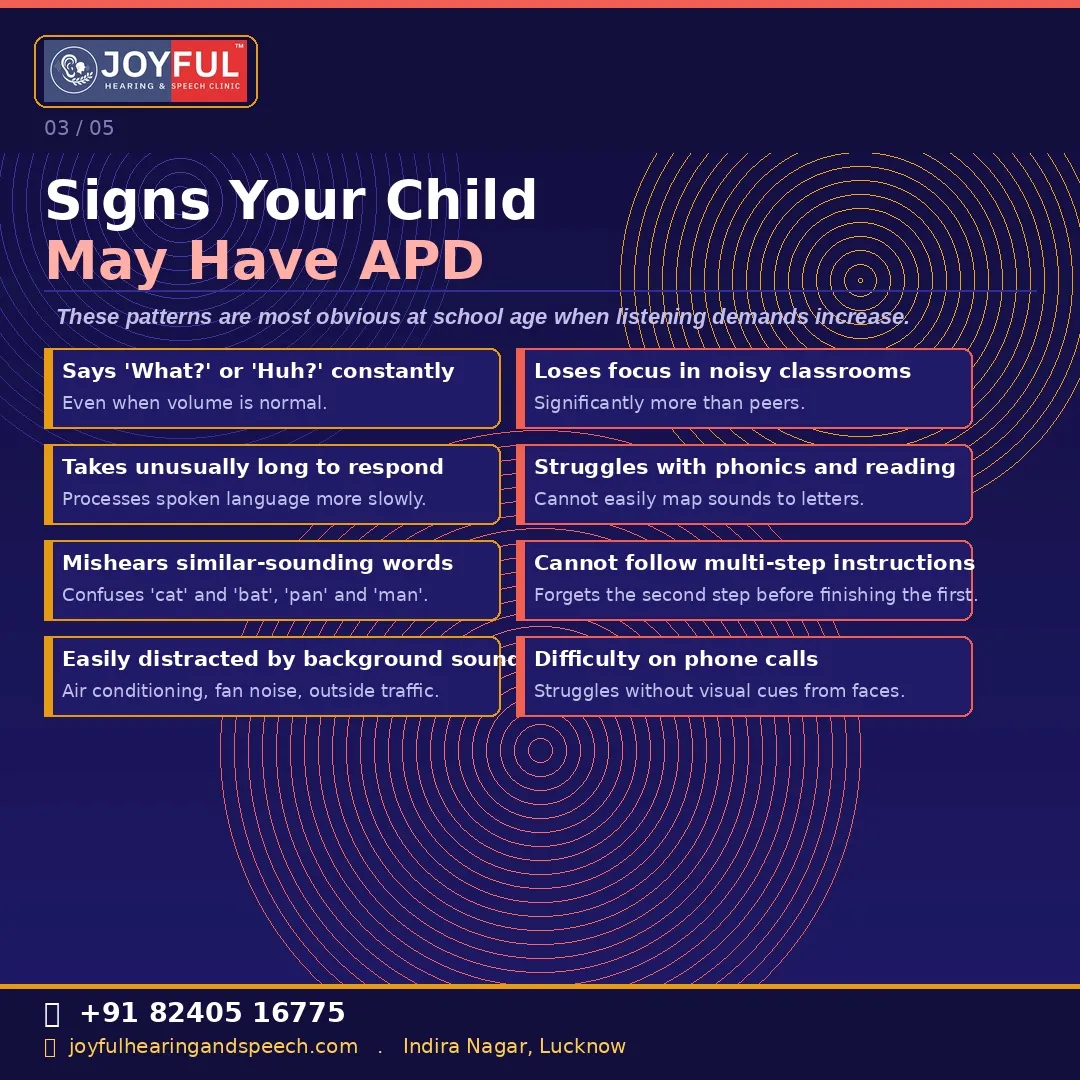
Auditory Processing Disorder is a neurological condition where the ears successfully collect sound waves, but the central nervous system struggles to interpret, decode, or filter those auditory signals. A child with APD can hear a pin drop across a quiet room, yet fail completely to understand a teacher speaking in a bustling classroom.
This distinction is critical: standard pediatric hearing screenings test hearing sensitivity (pure tones). They do not test auditory perception—how the brain separates speech from background noise, sequences phonemes, or interprets multi-step verbal cues.
Common Signs of APD in School-Age Children
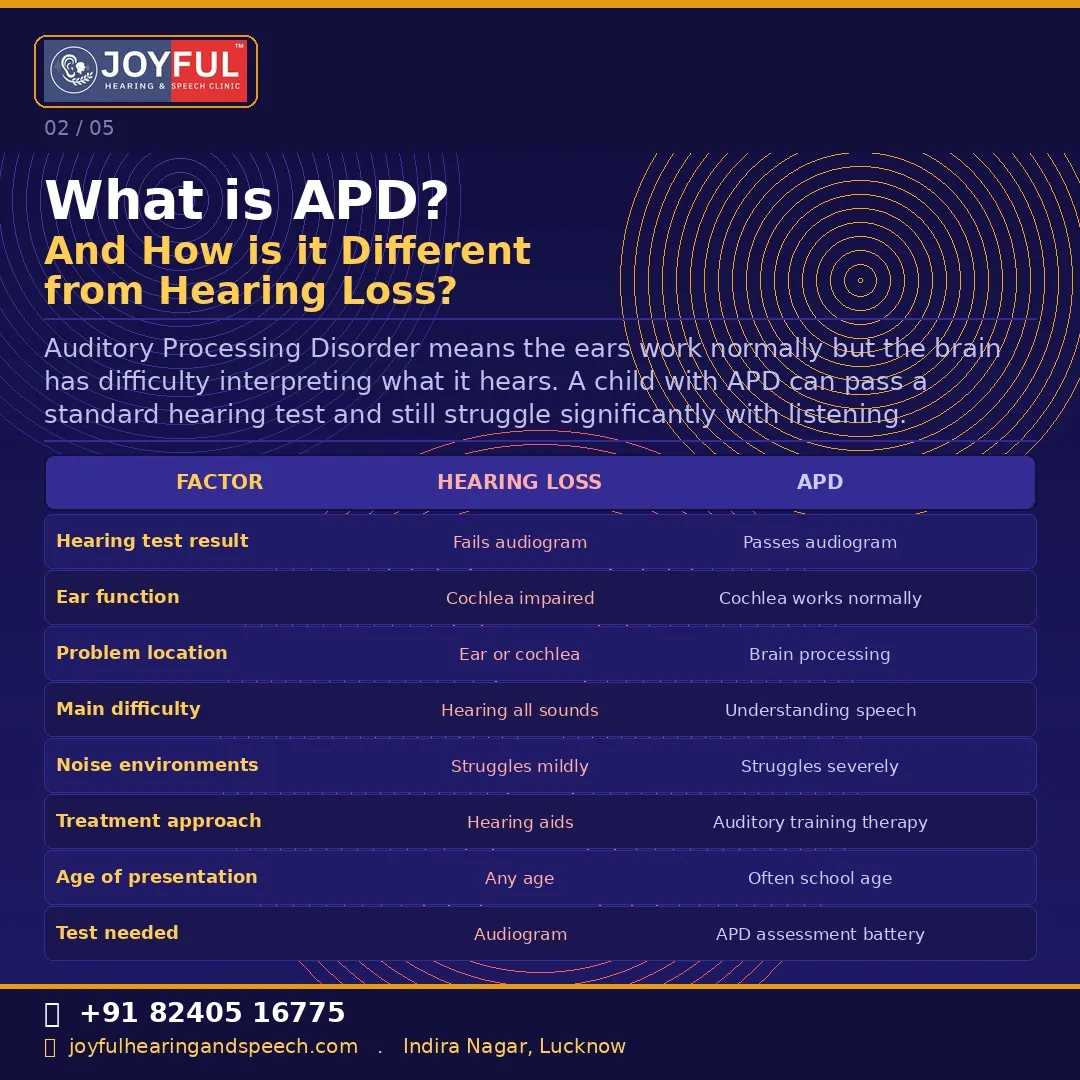
Signs of APD typically become prominent as academic and social listening demands intensify:
- Frequently saying "What?" or "Huh?" despite normal hearing thresholds.
- Extreme difficulty paying attention or understanding teachers in noisy classrooms.
- Struggles following multi-step directions (e.g., forgets step 2 and 3).
- Confusing similar-sounding words (e.g., "seventy" vs "seventeen", "couch" vs "chair").
- Delayed processing speed—taking several extra seconds to respond to questions.
- Difficulty with reading comprehension, phonics, and spelling.
- Heightened sensitivity or fatigue after loud birthday parties or school assemblies.
Misdiagnosis: Why APD is Often Mistaken for ADHD
Because children with APD often look away, daydream, or fail to follow classroom instructions when background noise is high, they are frequently misdiagnosed with Attention Deficit Hyperactivity Disorder (ADHD) or generalized learning disabilities. While ADHD is an attention regulation deficit, APD is an auditory decoding deficit. Accurate diagnostic distinction requires specialized audiological testing.
How APD is Diagnosed and Treated in Lucknow
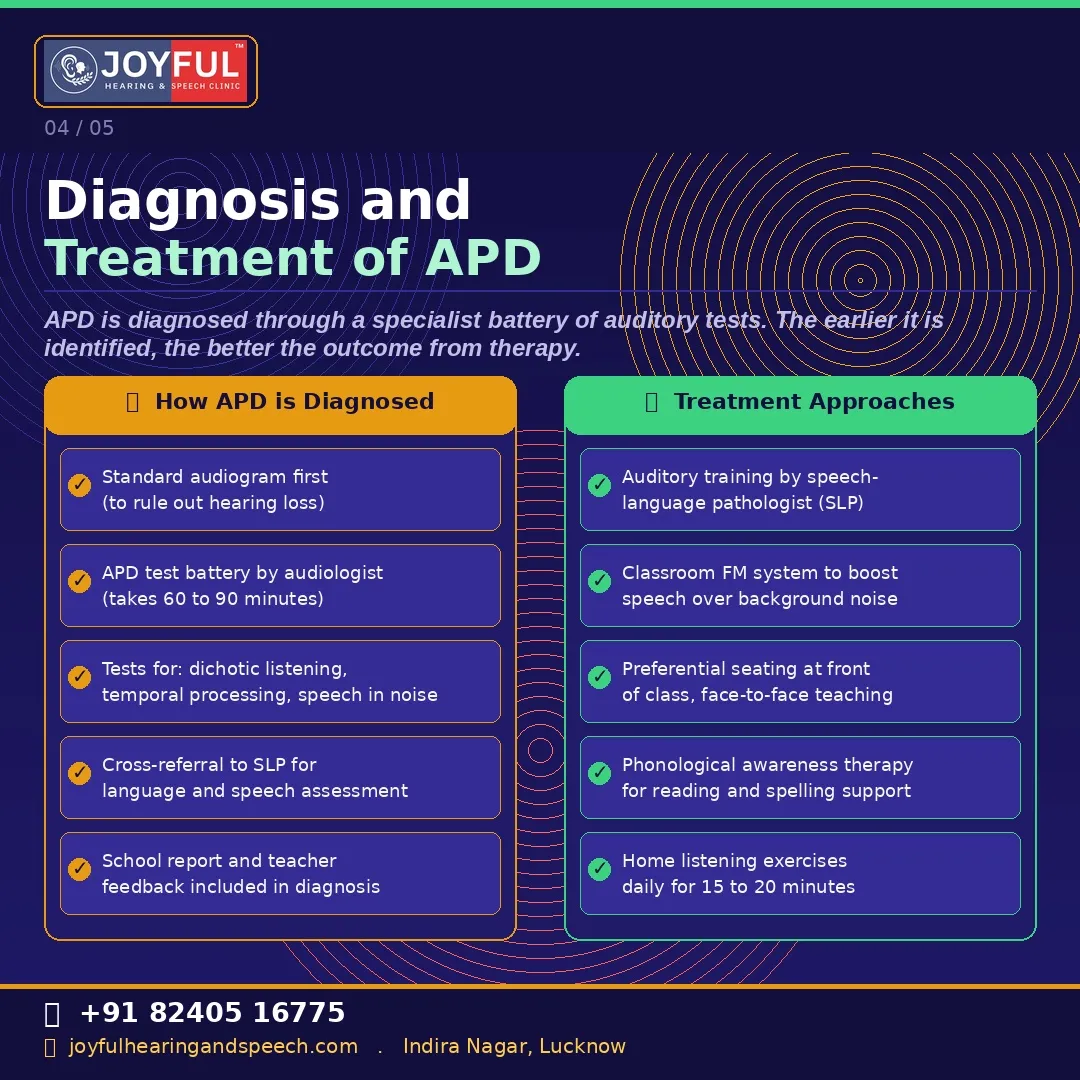
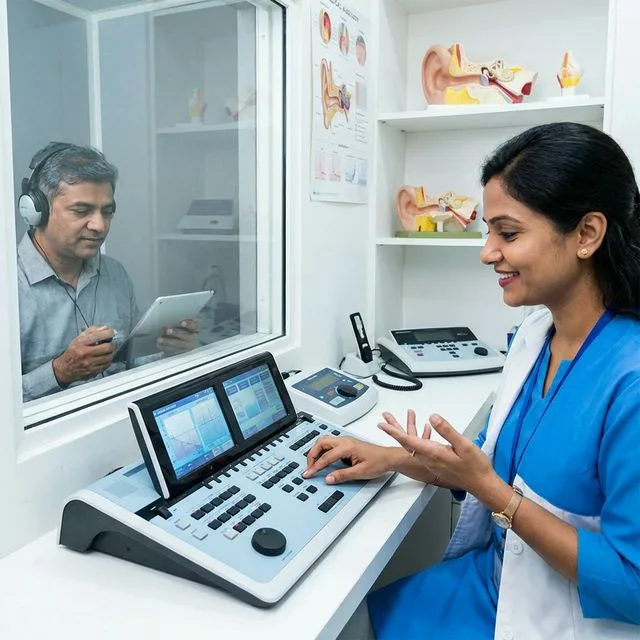
At Joyful Hearing & Speech Clinic in Indira Nagar, Lucknow, our pediatric audiology team utilizes specialized APD assessment batteries:
- Dichotic Listening Tests: Assessing how both cerebral hemispheres integrate different simultaneous sounds.
- Speech-in-Noise Assessments: Quantifying speech discrimination under realistic classroom noise conditions.
- Temporal Processing Tests: Measuring auditory timing, rhythm, and gap detection necessary for decoding speech.
Treatment combines targeted speech-language therapy, compensatory classroom strategies (such as low-gain remote microphone systems and preferential seating), and home auditory training exercises that systematically strengthen neural pathways.
Book an APD & Speech Assessment in Lucknow
If your child hears but struggles to understand spoken language, consult our pediatric audiologists and speech therapists today.
Written By
Joyful Hearing Specialists
Clinical Audiologists & Speech Therapists