Cochlear Implants vs Hearing Aids: Which is Right for You?
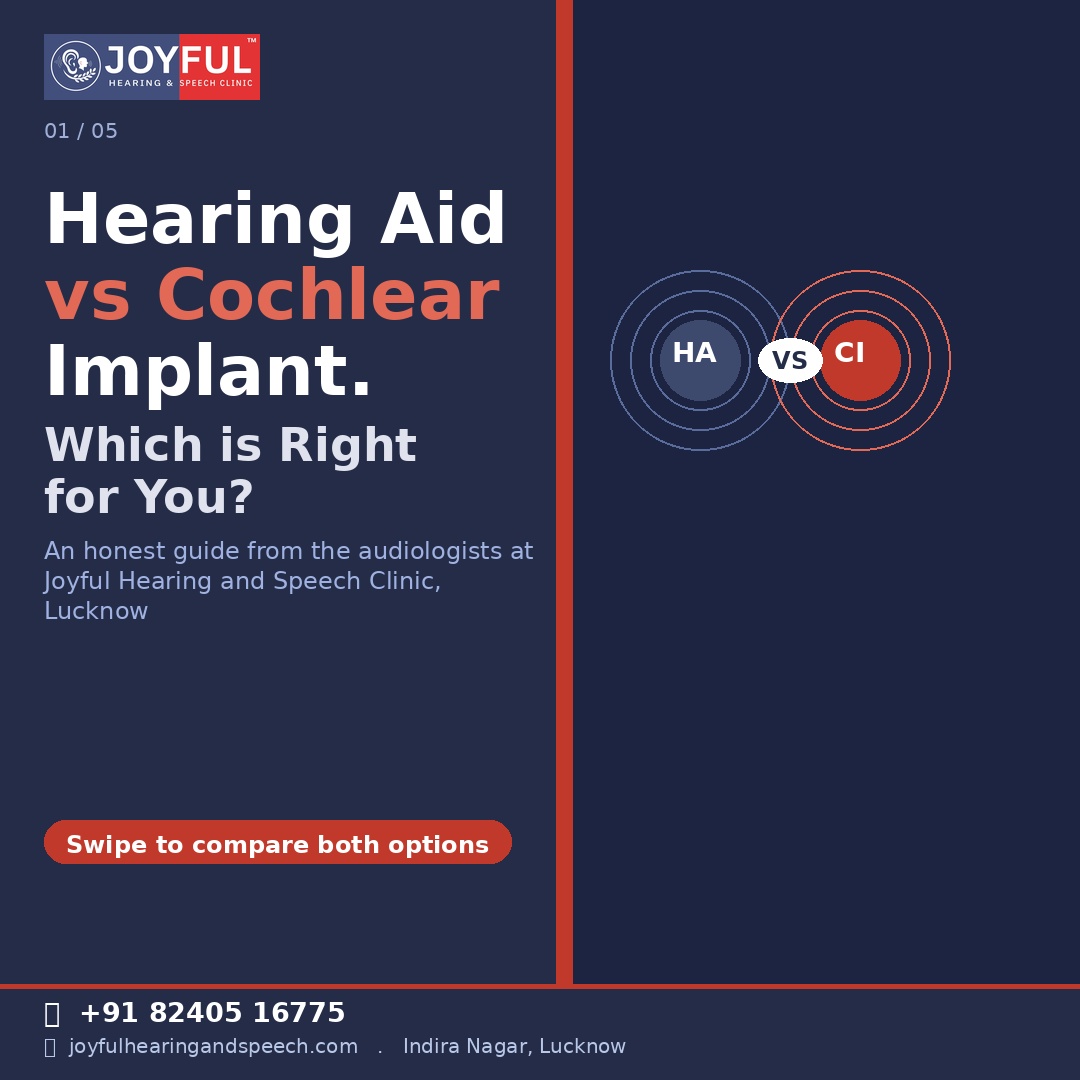
When someone is diagnosed with significant hearing loss, two options often come up in conversation with their audiologist: a hearing aid or a cochlear implant. Both devices restore access to sound. Both can be life-changing. But they work in entirely different ways and suit very different patients. Understanding the distinction is the first step toward making the right choice.
What is a hearing aid?
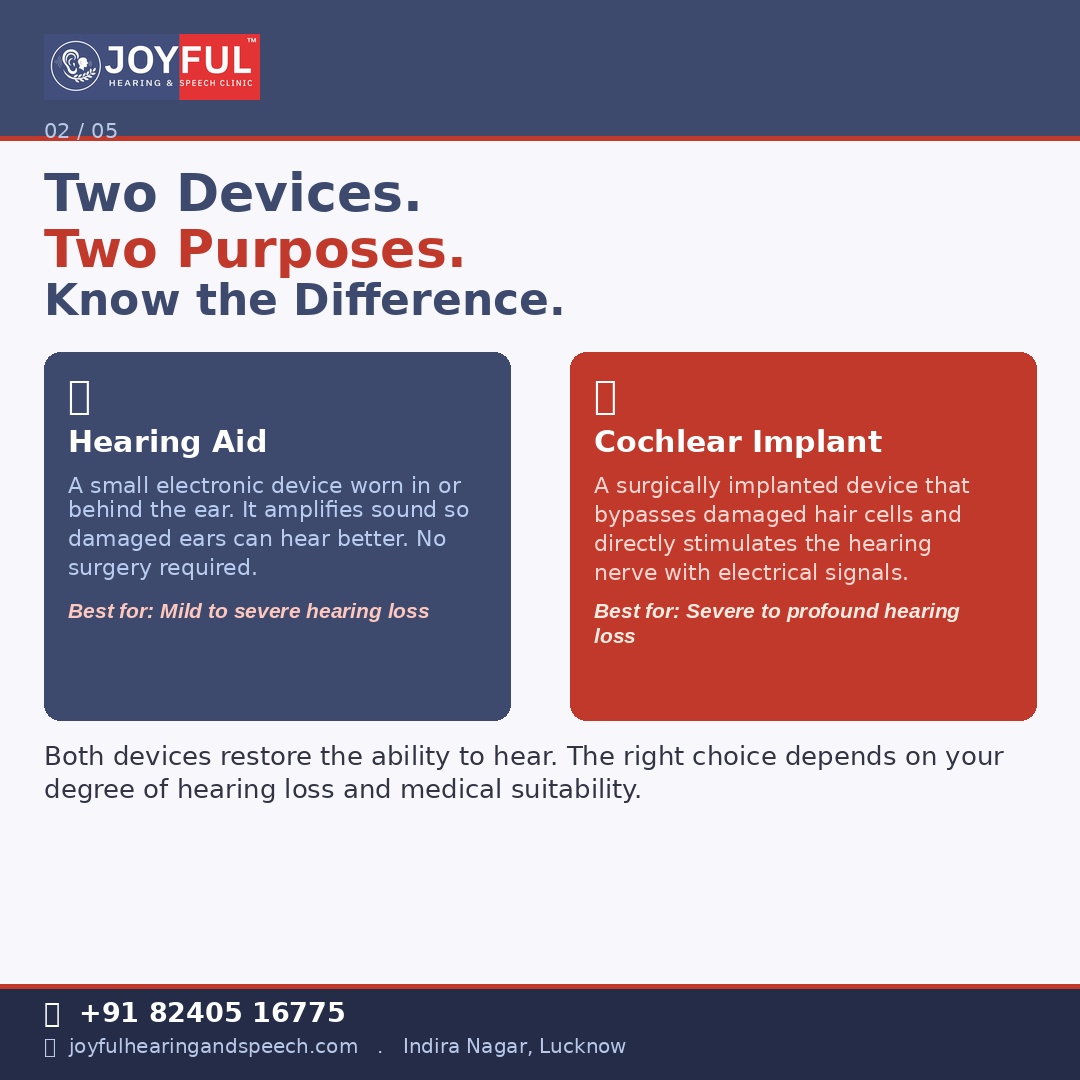
A hearing aid is a small electronic device worn in or behind the ear. It picks up sound from the environment, amplifies it, and delivers it through the ear canal to the eardrum and inner ear. Modern digital hearing aids are remarkably sophisticated, featuring artificial intelligence, Bluetooth streaming, rechargeable batteries, and real-time noise cancellation. Crucially, they require no surgery and can be fitted and adjusted in a single clinic visit. Hearing aids are suitable for people with mild to severe hearing loss who still have functional cochlear hair cells.
What is a cochlear implant?
A cochlear implant is a surgically implanted electronic device designed for patients with severe to profound hearing loss who receive little or no benefit from hearing aids. Unlike a hearing aid, which amplifies sound, a cochlear implant bypasses the damaged inner ear entirely. It uses an external processor worn behind the ear to capture sound, converts it into electrical signals, and transmits those signals directly to the auditory nerve via a tiny electrode array implanted inside the cochlea. The brain then interprets these signals as sound.
The key differences at a glance
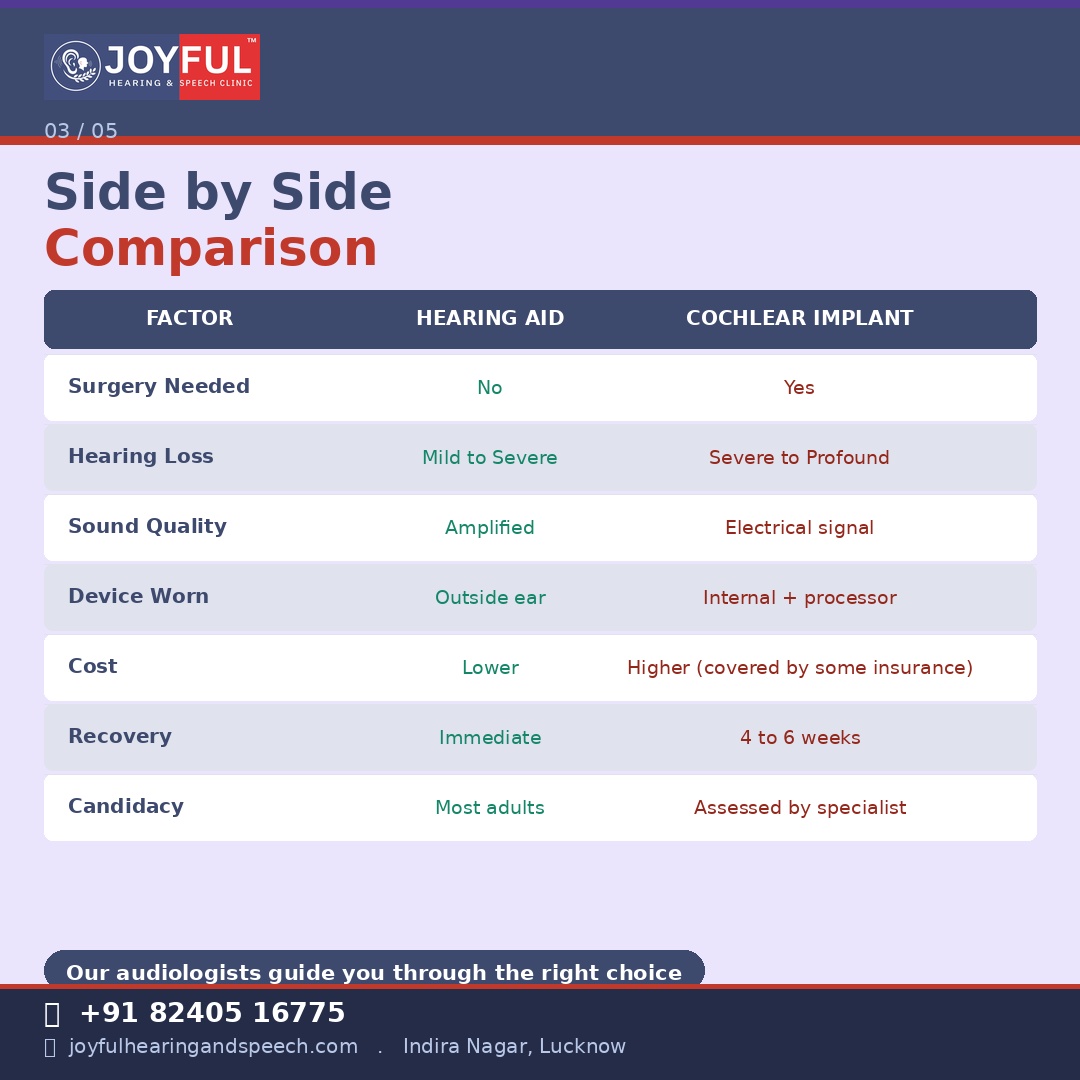
The most fundamental difference is candidacy. If hearing aids provide adequate benefit, a cochlear implant is generally not recommended. Cochlear implants are reserved for those with profound loss where amplification is insufficient. Surgery, recovery time of four to six weeks, and a period of auditory rehabilitation are all part of the cochlear implant journey. Hearing aids, by contrast, are non-invasive, immediately reversible, and available at a much lower cost.
Who should consider a cochlear implant?
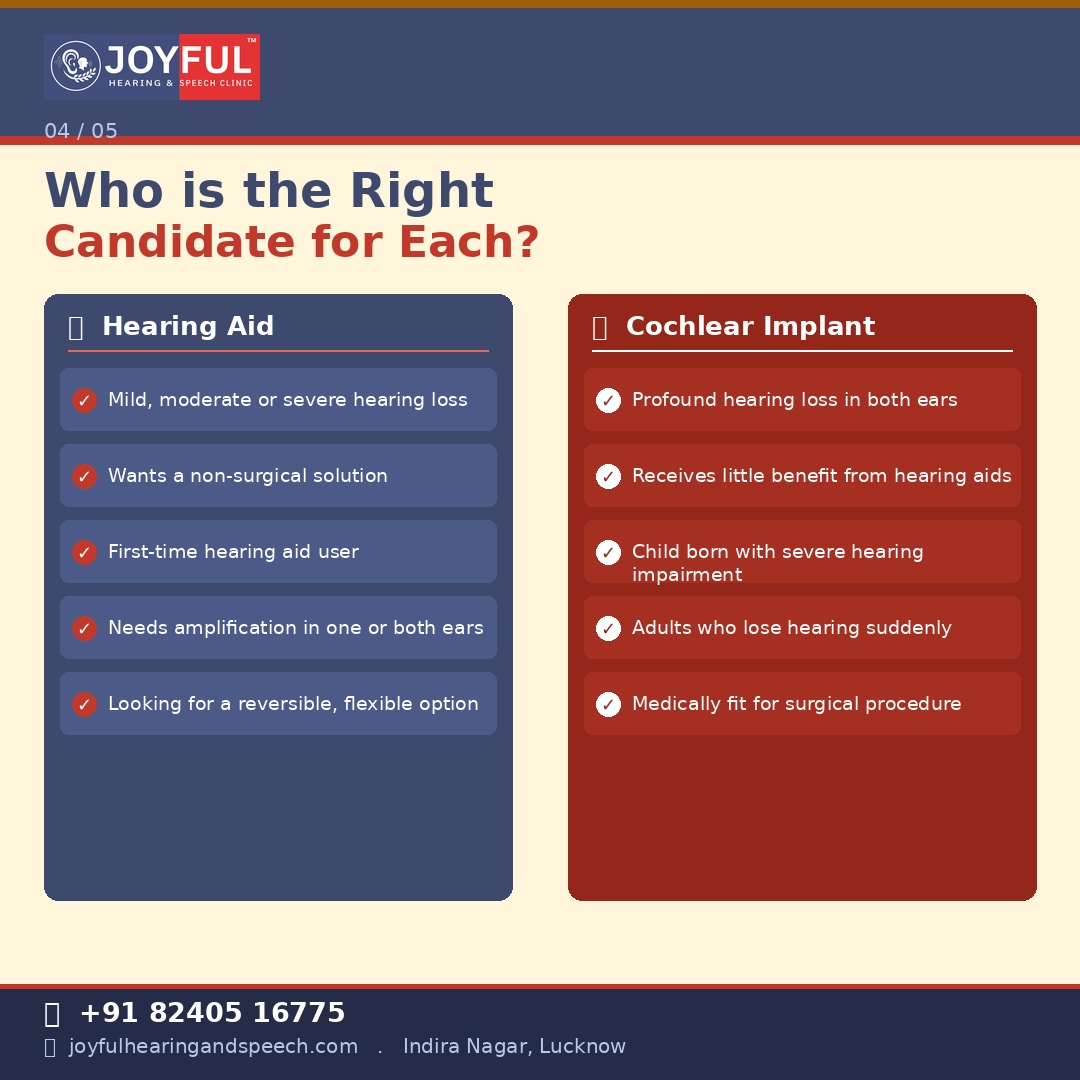
Strong candidates include adults with severe to profound bilateral hearing loss who score poorly on speech perception tests even with the best hearing aids, children born with significant hearing impairment, and individuals who suddenly lose their hearing due to illness or injury. A thorough medical and audiological evaluation at a specialist clinic determines suitability.
Who benefits most from hearing aids?
The vast majority of people with hearing loss, including older adults with age-related hearing decline, those with single-sided deafness, and individuals with mild to moderate loss, are excellent candidates for modern hearing aids without any need for surgical consideration.

Speak to our specialists today
At Joyful Hearing and Speech Clinic, Indira Nagar, Lucknow, our audiologists provide comprehensive hearing assessments, cochlear implant counselling, and hearing aid trials to help you make a fully informed decision.

Written By
Joyful Hearing Specialists
Clinical Audiologists & Speech Therapists