6 Signs Your Elderly Parent Is Losing Their Hearing
Hearing loss is a natural part of aging, often developing so gradually that it goes unnoticed at first. Known as age-related hearing loss (presbycusis), it affects a significant portion of older adults and can quietly impact communication, relationships, and overall quality of life.
As a caregiver or family member, recognizing the early warning signs can make a meaningful difference. The sooner hearing issues are identified, the sooner your loved one can receive support, improving both their independence and emotional well-being.
Here are six common signs your elderly parent may be losing their hearing.
1. Trouble Understanding People Over the Phone

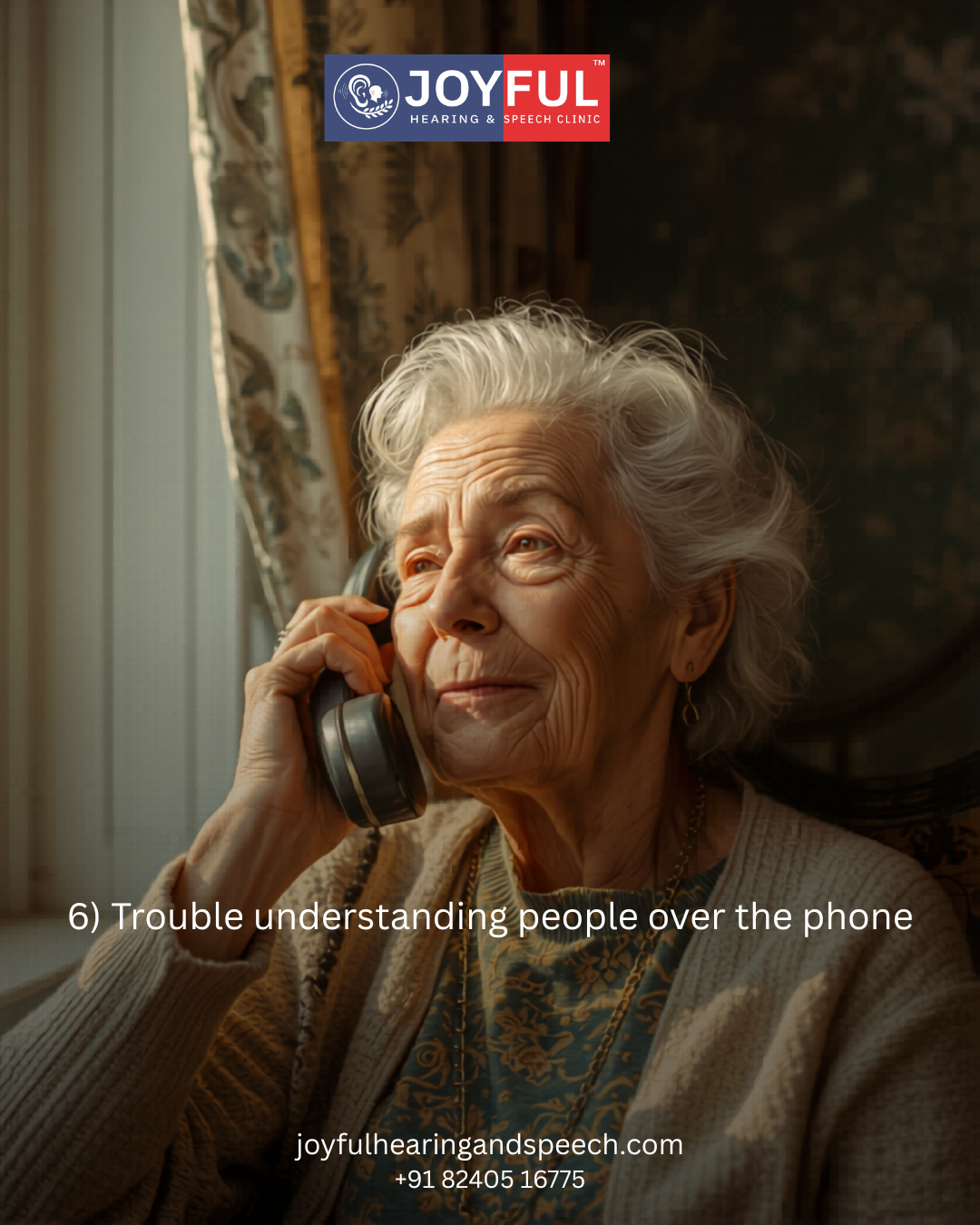
If your parent struggles to follow conversations on the phone, it may indicate hearing difficulties. Without visual cues like facial expressions or lip movements, understanding speech becomes more challenging especially when hearing loss is present.
2. Difficulty Following Conversations in Groups

Group conversations can become overwhelming for someone with hearing loss. If your parent finds it hard to keep up when two or more people are talking, or frequently loses track of discussions, this could be an early warning sign.
3. Frequently Asking People to Repeat Themselves
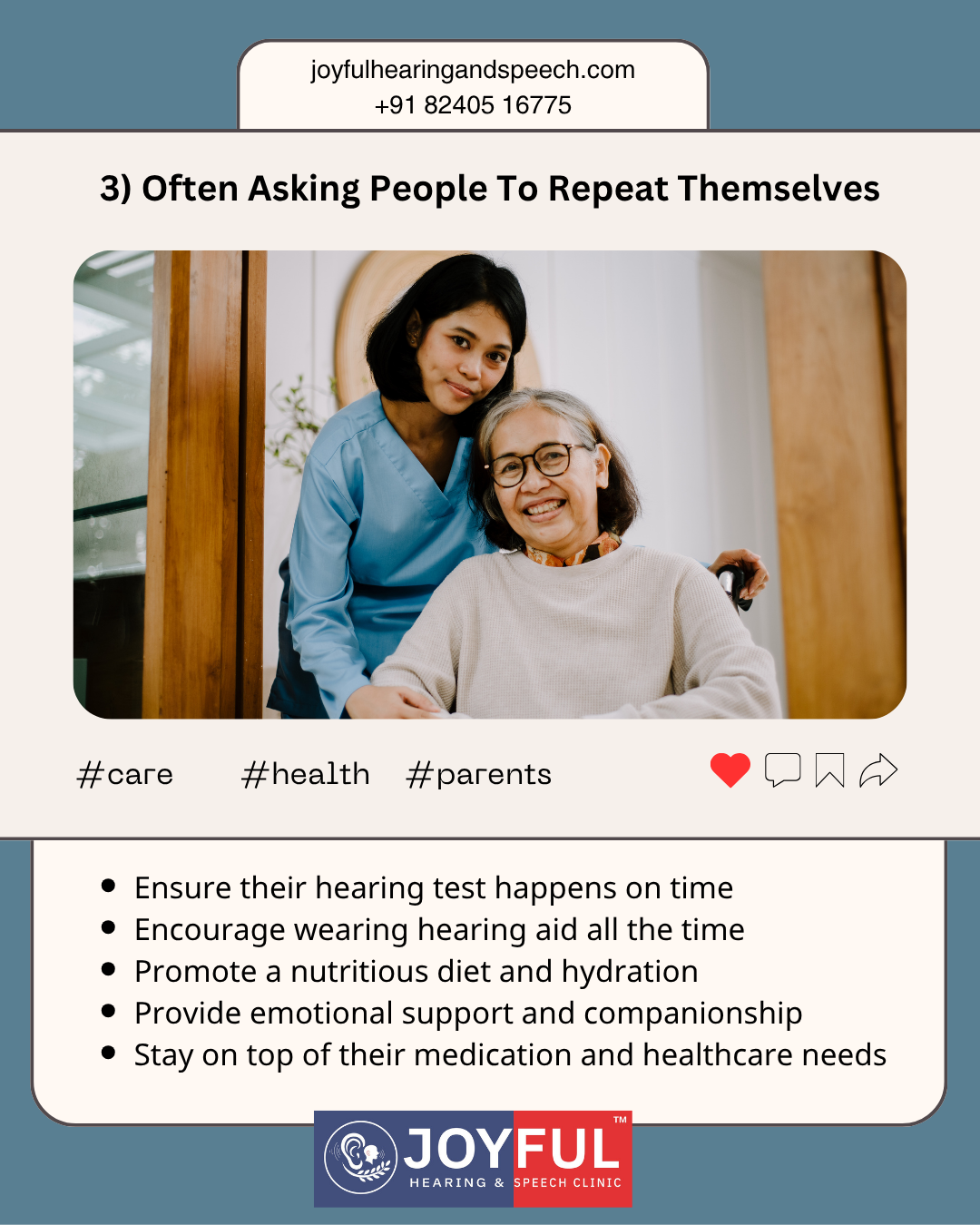
One of the most noticeable signs is repeatedly asking others to say things again. You may hear phrases like “Can you repeat that?” or “What did you say?” more often than usual. This often stems from difficulty hearing certain sounds or words clearly.
4. Thinking That Others Are Mumbling

If your parent frequently says that people are “mumbling” or not speaking clearly, the issue may not be others it could be their hearing. Hearing loss often affects the ability to detect higher-frequency sounds, which are essential for understanding speech.
5. Turning Up the TV Volume Higher Than Others Prefer

If the TV volume seems excessively loud compared to what others find comfortable, it could point to hearing loss. Your parent may not realize how loud it is they’re simply adjusting it to a level they can hear.
6. Trouble Understanding Speech in Noisy Environments
Background noise can make it especially hard for someone with hearing loss to distinguish speech. Restaurants, family gatherings, or busy public places may become frustrating or exhausting, leading your parent to avoid these situations altogether.
Why Early Detection Matters
Hearing loss doesn’t just affect communication, it can impact safety, mental health, and even cognitive function. Many older adults don’t realize their hearing is declining because the change happens slowly over time. Early intervention such as hearing tests, hearing aids, or speech therapy can significantly improve quality of life and help your loved one stay engaged and independent.
What You Can Do Next
If you’ve noticed one or more of these signs in your parent, consider taking the next step:
- Schedule a professional hearing evaluation
- Encourage open, supportive conversations about hearing health
- Explore treatment options tailored to their needs
At Joyful Hearing and Speech, we’re committed to helping families navigate hearing challenges with compassion and expertise. Early care leads to better outcomes—and a happier, more connected life.
Final Thoughts
Recognizing hearing loss early is one of the best ways to support your aging parent. Small signs today can become bigger challenges tomorrow but with timely care, they don’t have to.
If you’re concerned, trust your instincts and seek professional guidance. Your attention could make all the difference.

Written By
Joyful Hearing Specialists
Clinical Audiologists & Speech Therapists