Feeding Therapy for Children: When Eating Becomes a Challenge
Every parent knows that children can be fussy eaters. But there is a significant difference between a child who prefers chips over broccoli and a child who gags, panics, cries or refuses entire food groups at every meal. When eating becomes a consistent source of distress, the cause is rarely a matter of willpower or parenting. It may be a feeding difficulty that responds very well to specialist therapy.
What is feeding therapy?
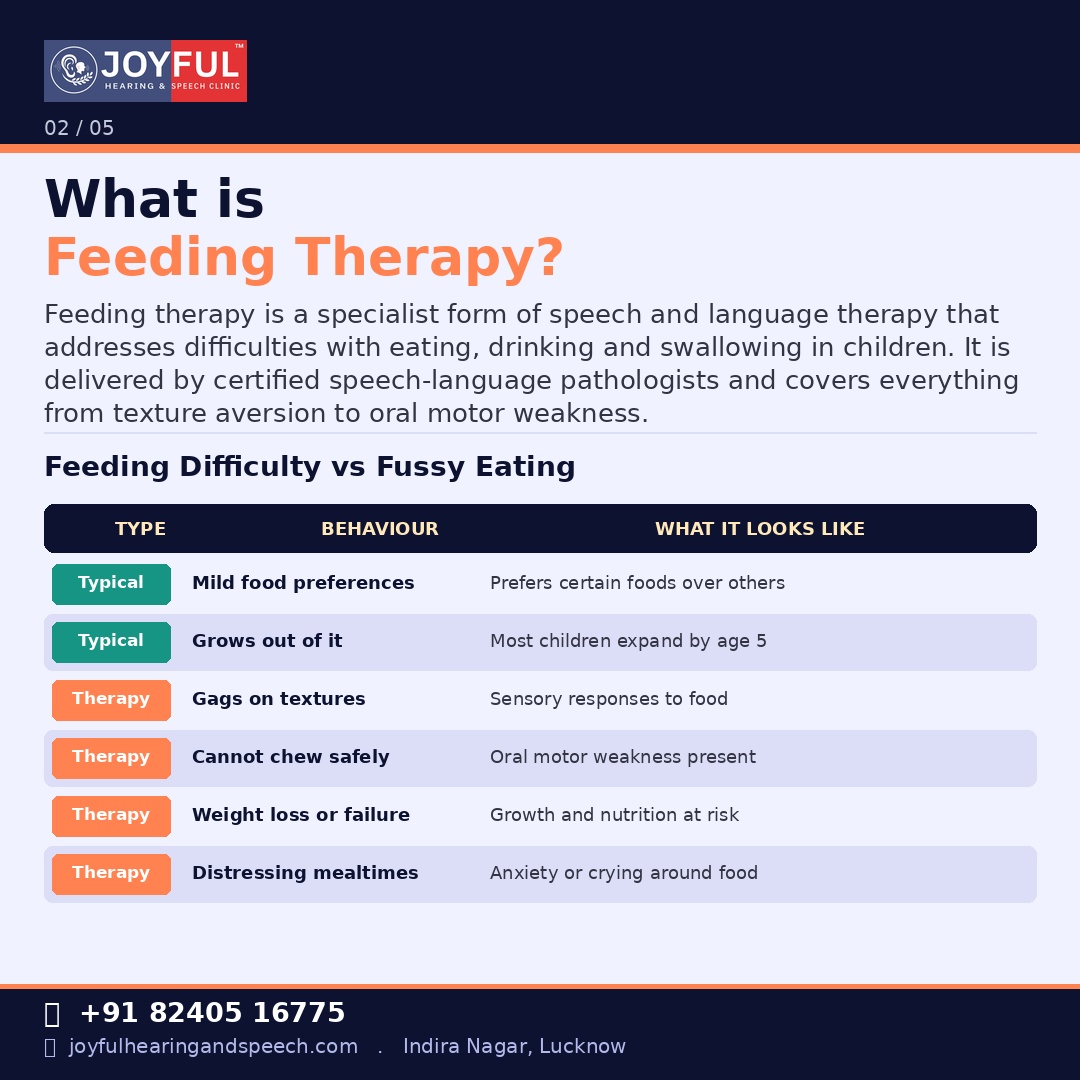
Feeding therapy is a specialist form of speech and language therapy that addresses difficulties with eating, drinking and swallowing in children. It is delivered by certified speech-language pathologists who have expertise in oral motor development, sensory processing and swallowing function. It covers a broad range of difficulties, from extreme texture aversion and refusal of entire food groups to weakness in chewing and swallowing mechanics that can pose genuine nutritional and safety risks.
Fussy eating versus a feeding difficulty
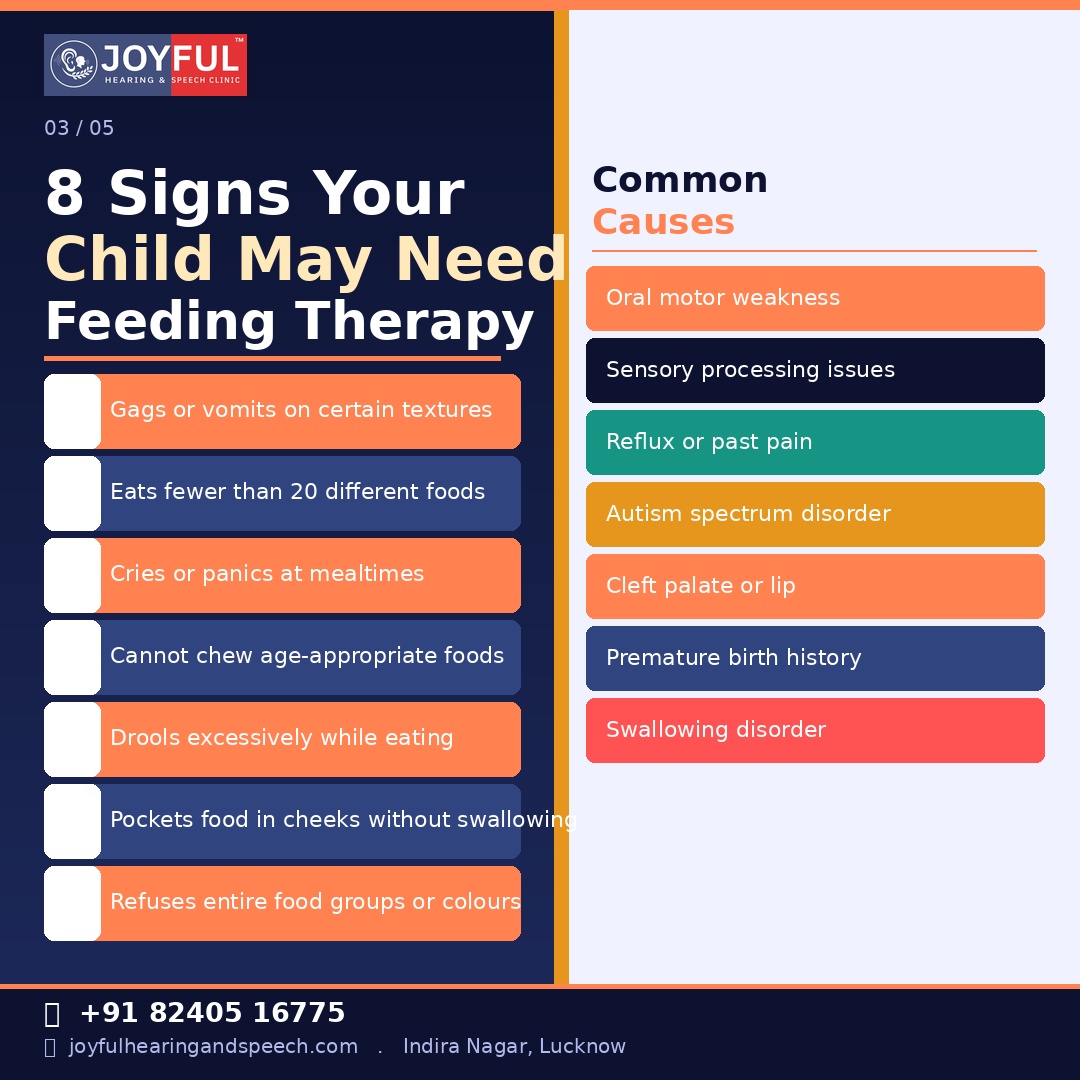
The distinction matters enormously. Typical fussy eating involves mild food preferences that most children gradually outgrow by age five. A feeding difficulty involves gagging or vomiting on specific textures, restricting food intake to fewer than twenty different items, experiencing visible distress or anxiety at mealtimes, difficulty chewing age-appropriate foods, drooling excessively while eating, or pocketing food in cheeks without swallowing. When these patterns persist and affect the child’s growth, nutrition or quality of life, specialist assessment is needed.
What causes feeding difficulties in children?
The causes are varied and often overlapping. Oral motor weakness—insufficient strength or coordination in the lips, tongue and jaw—is one of the most common. Sensory processing difficulties cause children to experience textures, temperatures or smells as overwhelming rather than normal. Children with a history of reflux or pain associated with eating may have developed avoidance behaviours. Autism spectrum disorder, cleft palate or lip, premature birth and neurological conditions are also strongly associated with feeding challenges.
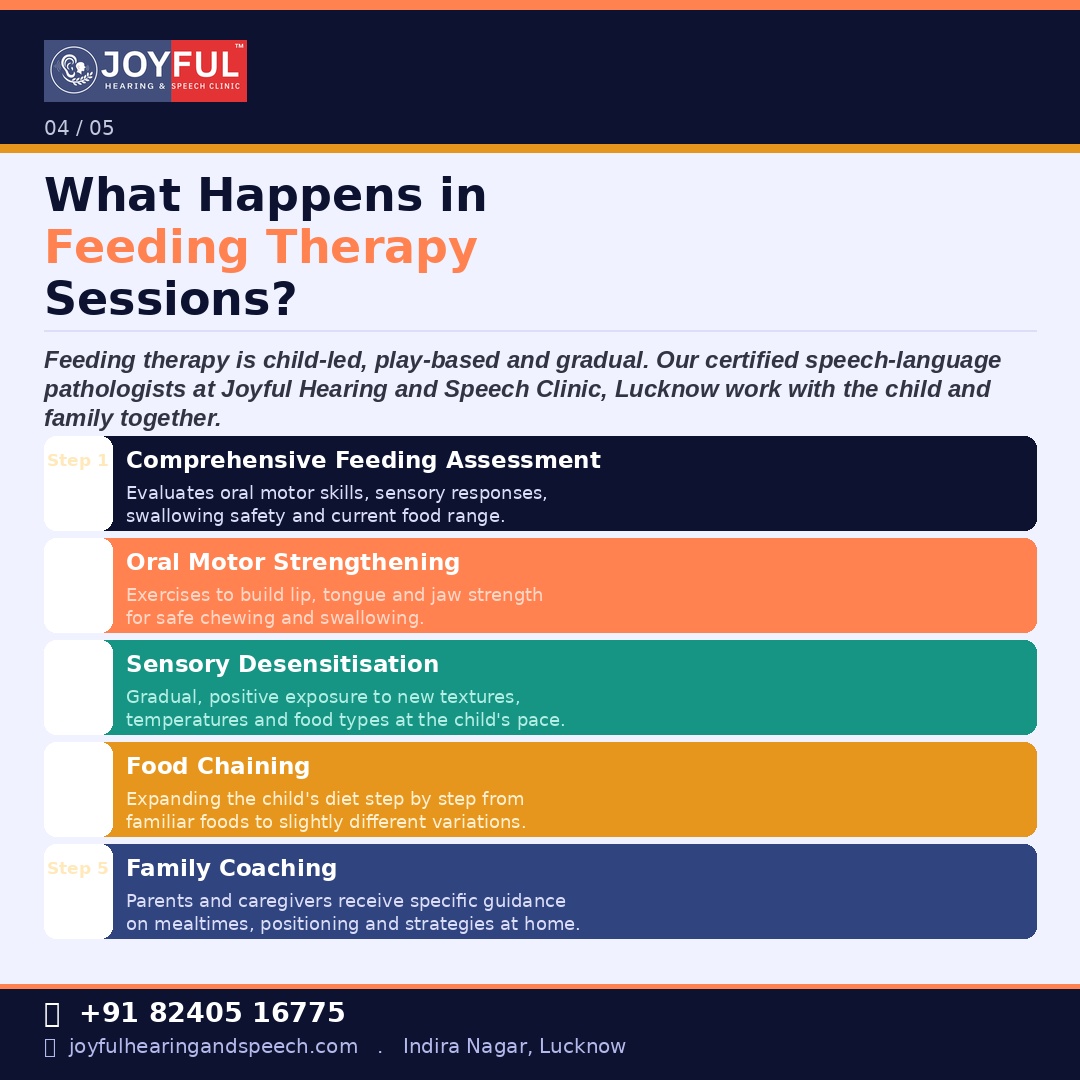
What happens in feeding therapy?
At Joyful Hearing and Speech Clinic, Lucknow, feeding therapy is child-led, play-based and gradual. The process begins with a comprehensive feeding assessment that evaluates oral motor skills, sensory responses, swallowing safety and the current range of foods accepted. Treatment then follows a structured pathway: oral motor strengthening exercises, sensory desensitisation through positive and gradual exposure to new textures, food chaining to expand the diet step by step, and coaching for parents and caregivers on mealtime strategies at home. Progress is reviewed regularly and the programme adapts to each child’s pace.
Feeding therapy is not about forcing children to eat. It is about removing the barriers that make eating difficult or frightening, and rebuilding a positive, safe relationship with food.
Help Your Child Enjoy Mealtime
If your child experiences severe mealtime distress or food aversion, book a pediatric feeding assessment at Joyful Hearing and Speech Clinic.

Written By
Joyful Hearing Specialists
Clinical Audiologists & Speech Therapists