
Fungal Ear Infections in Monsoon: Signs, Causes and When to See an Audiologist
Most people have heard of bacterial ear infections. Far fewer are aware of otomycosis, a fungal infection of the ear canal that becomes significantly more common during monsoon season across India. Because its symptoms overlap with other ear conditions, it is frequently misdiagnosed and mistreated, prolonging discomfort and risking hearing damage. Here is everything you need to know.
What is otomycosis?
Otomycosis is a fungal infection of the outer ear canal, most commonly caused by Aspergillus and Candida species. Fungi require warmth, darkness and moisture to grow, and the human ear canal during monsoon months provides all three in abundance. It is distinct from bacterial outer ear infections, and critically, it requires different treatment. Antifungal drops, not antibiotics, are needed, which is why accurate diagnosis matters.
How do you know if it is fungal rather than bacterial?
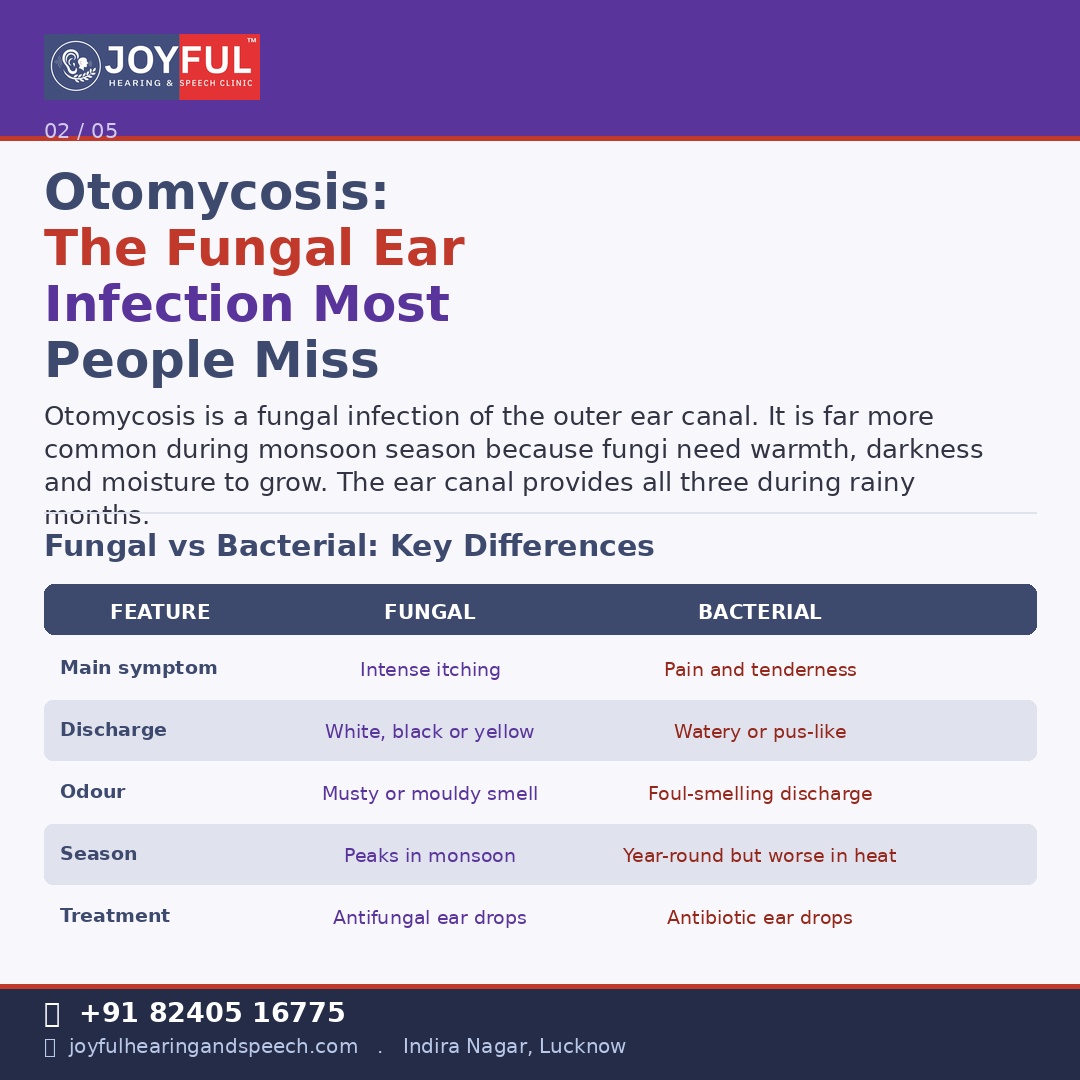
The most telling symptom of a fungal ear infection is intense, persistent itching inside the ear canal, often more pronounced than the pain. Discharge may appear white, black or yellowish and may have a musty or mouldy odour. There may be a sensation of fullness or blocked hearing. Bacterial infections, by contrast, tend to cause more prominent pain and tenderness when the ear is touched, and discharge is typically watery or pus-like.
Who faces the highest risk during monsoon?
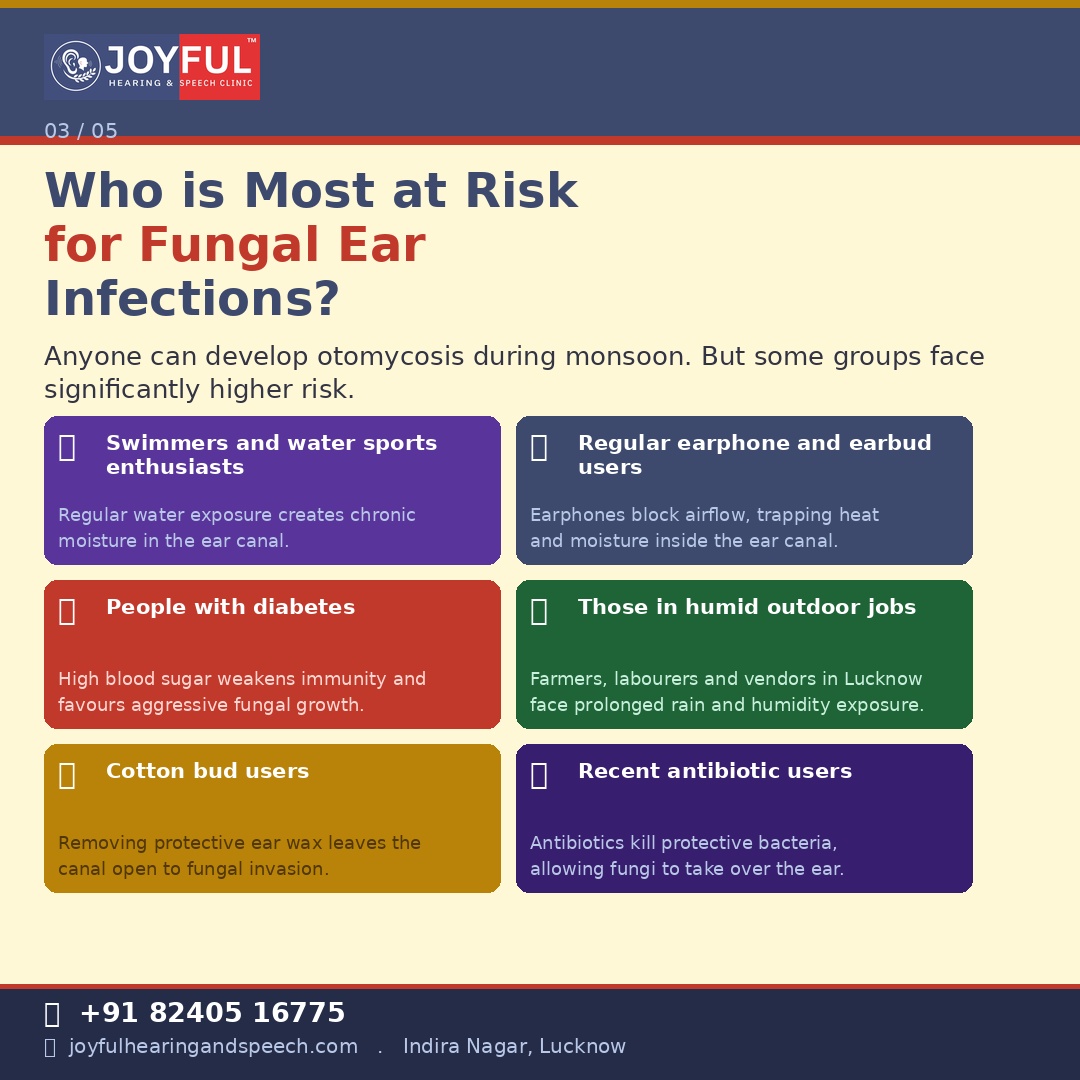
Regular swimmers and outdoor workers in Lucknow face elevated risk due to sustained water exposure. People who use earphones or earbuds for extended periods trap heat and moisture inside the canal, creating an enclosed environment ideal for fungal growth. Individuals with diabetes are particularly vulnerable because high blood sugar weakens immune defences and supports aggressive fungal activity. A recent course of antibiotics is another major risk factor: by eliminating protective bacteria, antibiotics allow fungi to colonise the ear unopposed. Cotton bud users who remove protective ear wax also strip away the canal’s natural antifungal barrier.

Treatment and when to seek specialist care
Otomycosis should never be self-treated. The first step at Joyful Hearing and Speech Clinic is professional ear cleaning using gentle suction to remove fungal debris from the canal, a procedure that must be performed by a trained audiologist. This is followed by prescription antifungal ear drops and strict instructions to keep the ear dry for a minimum of two weeks.
A follow-up hearing assessment after treatment is important to confirm no damage occurred during the infection. Seek immediate specialist care if symptoms persist beyond five days, if pain becomes severe, or if hearing drops suddenly. These are signs the infection may be spreading toward the middle ear.
Expert Care When You Need It
Don't ignore ear discomfort during the monsoon. Visit Joyful Hearing and Speech Clinic for professional ear cleaning and specialized fungal treatment.

Written By
Joyful Hearing Specialists
Clinical Audiologists & Speech Therapists