
Monsoon Ear Care: Why Rainy Season Triggers Swimmer's Ear and How to Prevent It
Every year as the monsoon arrives in Lucknow, audiologists see a sharp rise in patients with ear pain, itching and muffled hearing. The culprit in most cases is Otitis Externa, commonly known as swimmer's ear, a bacterial infection of the outer ear canal that thrives in the warm, wet conditions that monsoon season creates. Understanding why this happens and how to prevent it could save you weeks of discomfort and protect your hearing.
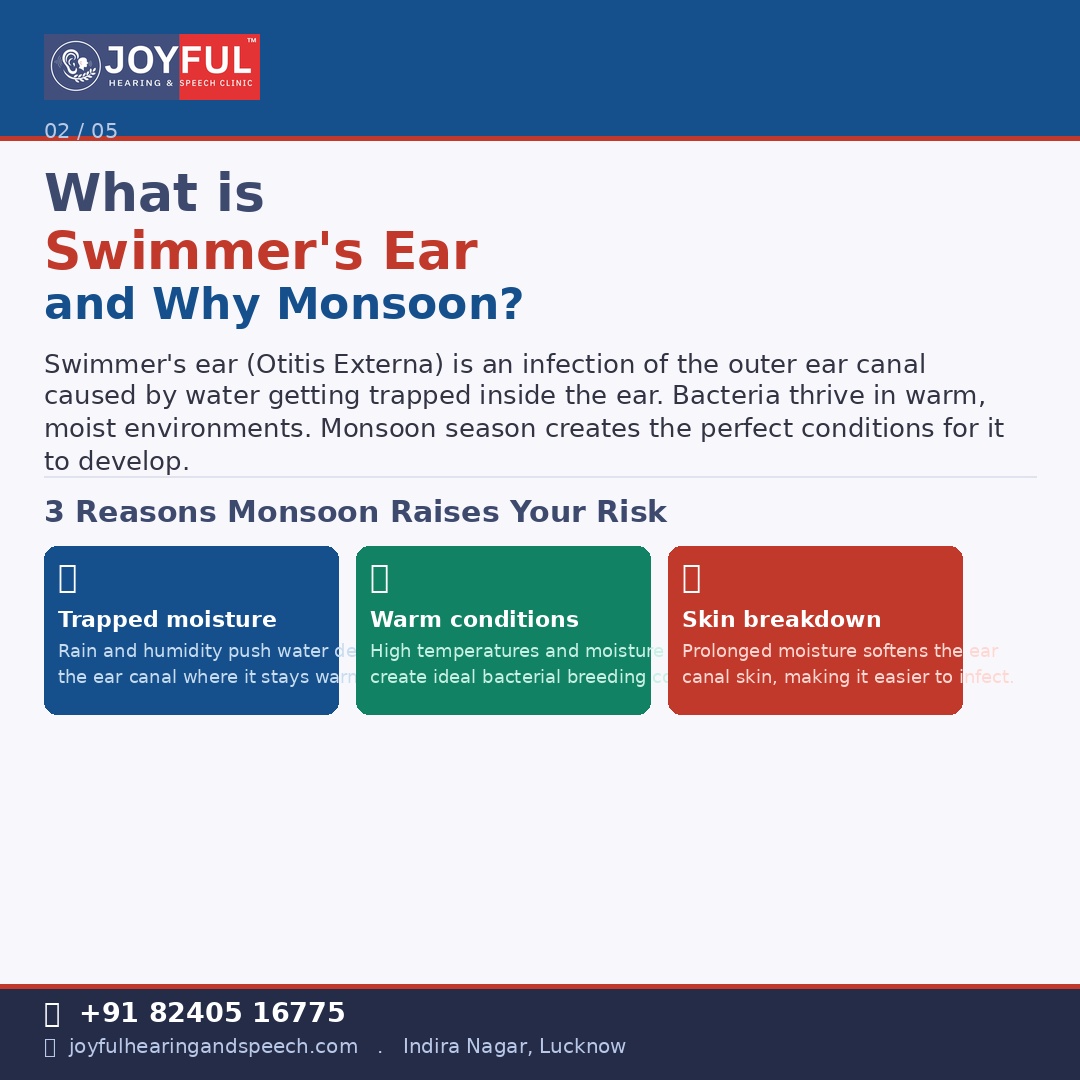
What is swimmer's ear and why does monsoon trigger it?
Swimmer's ear is an infection of the skin lining the outer ear canal, the passage between the outer ear and the eardrum. It is called swimmer's ear because water exposure is the most common trigger. During monsoon, rain and high humidity push moisture into the ear canal regularly. Once trapped, this moisture raises the local temperature and softens the delicate skin of the canal, creating a perfect breeding ground for bacteria, particularly Pseudomonas aeruginosa and Staphylococcus aureus.
Unlike middle ear infections, which occur behind the eardrum, swimmer's ear is entirely in the outer canal, making it highly preventable with the right precautions.
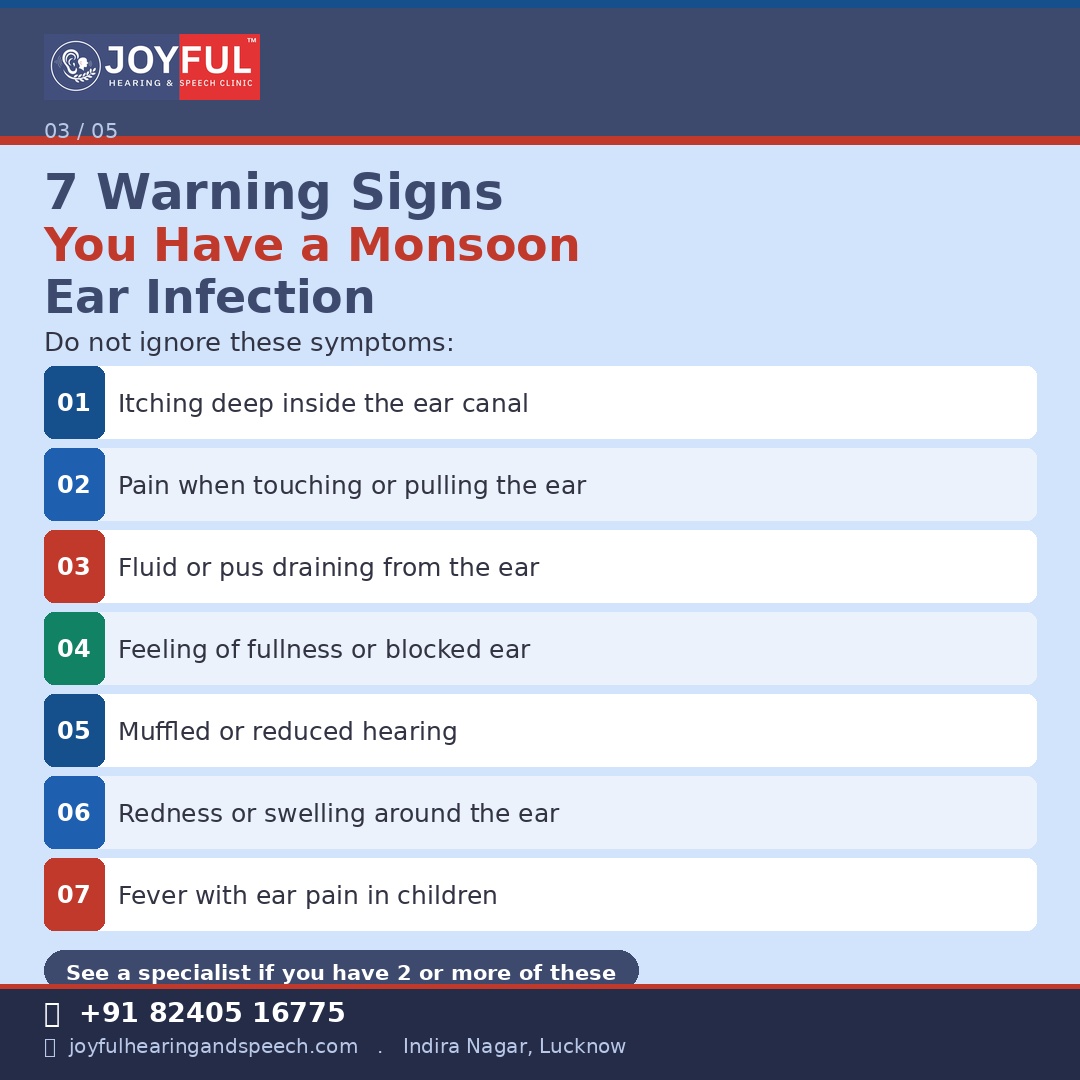
Seven warning signs to watch for
Do not dismiss ear discomfort during monsoon. Seek a specialist if you notice itching deep inside the canal, pain that worsens when the outer ear is touched or pulled, any fluid or discharge from the ear, a blocked or full feeling, muffled hearing, visible redness around the ear opening, or fever alongside ear pain in children. Early treatment prevents the infection from spreading deeper and causing temporary hearing loss.
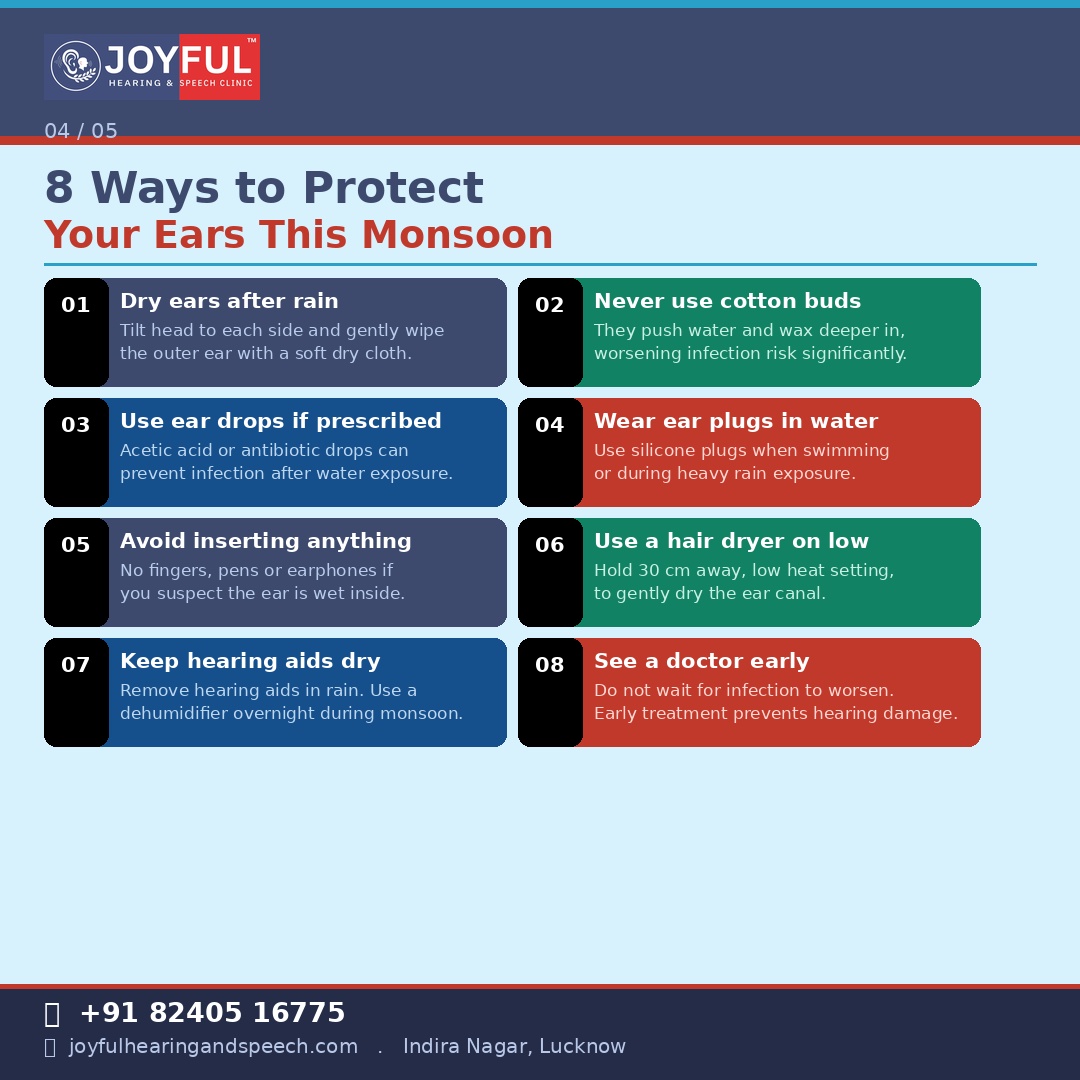
Eight ways to protect your ears this monsoon
The first and most important rule is to dry your ears after any rain or water exposure. Tilt your head to each side and gently wipe the outer ear with a clean, dry cloth. Never insert cotton buds. They push moisture and ear wax deeper into the canal, removing the natural protective wax that acts as a barrier against bacteria. If you spend time outdoors in rain, silicone ear plugs provide excellent protection.
For those who wear hearing aids, remove them during rain and store them in a dehumidifier overnight throughout the monsoon months. Moisture inside hearing aids not only causes infection risk but damages the delicate electronics. A low-heat hairdryer held 30 cm from the ear can help dry the canal gently after exposure. If water frequently enters your ears, your audiologist may prescribe preventive acetic acid drops that maintain the natural acidic environment of the ear canal and prevent bacterial growth.
When to see us
If symptoms persist beyond two days, if pain is severe, or if you notice a drop in hearing, visit Joyful Hearing and Speech Clinic immediately. Do not attempt to drain, clean or medicate the ear yourself.
Book a Consultation
A two-day delay can turn a minor infection into a significant one. Our audiologists provide same-day assessments during monsoon for ear pain and infection.

Written By
Joyful Hearing Specialists
Clinical Audiologists & Speech Therapists