Stammering in Children and Adults: Causes, Myths and How Speech Therapy Helps
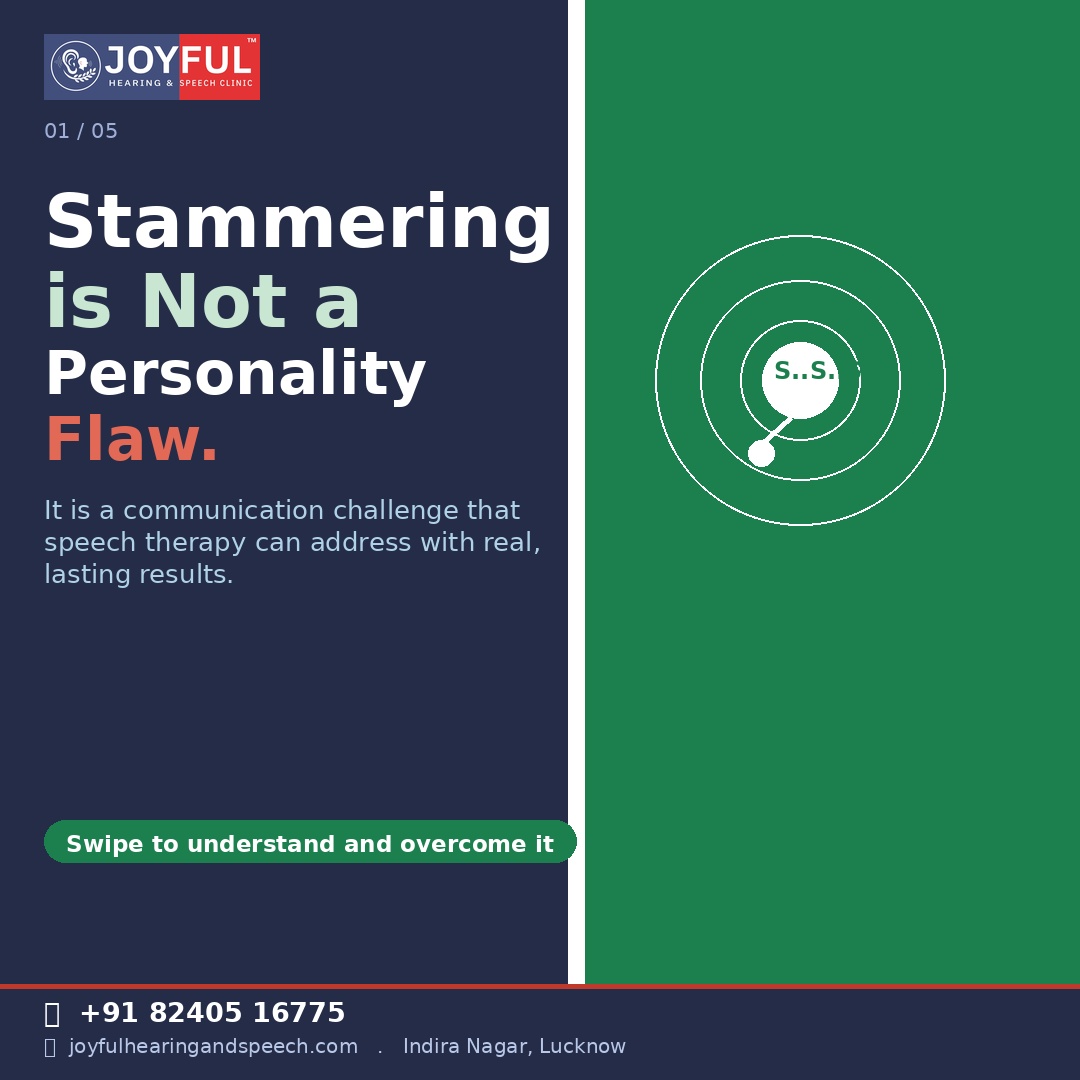
If you or someone you love stutters or stammers, you will know the frustration of having words that simply will not come out the way you want them to. Stammering is one of the most misunderstood communication disorders, surrounded by myths that cause unnecessary shame and delay in seeking help. The reality is that stammering is a neurological speech pattern and one that responds very well to professional speech therapy.
What exactly is stammering?
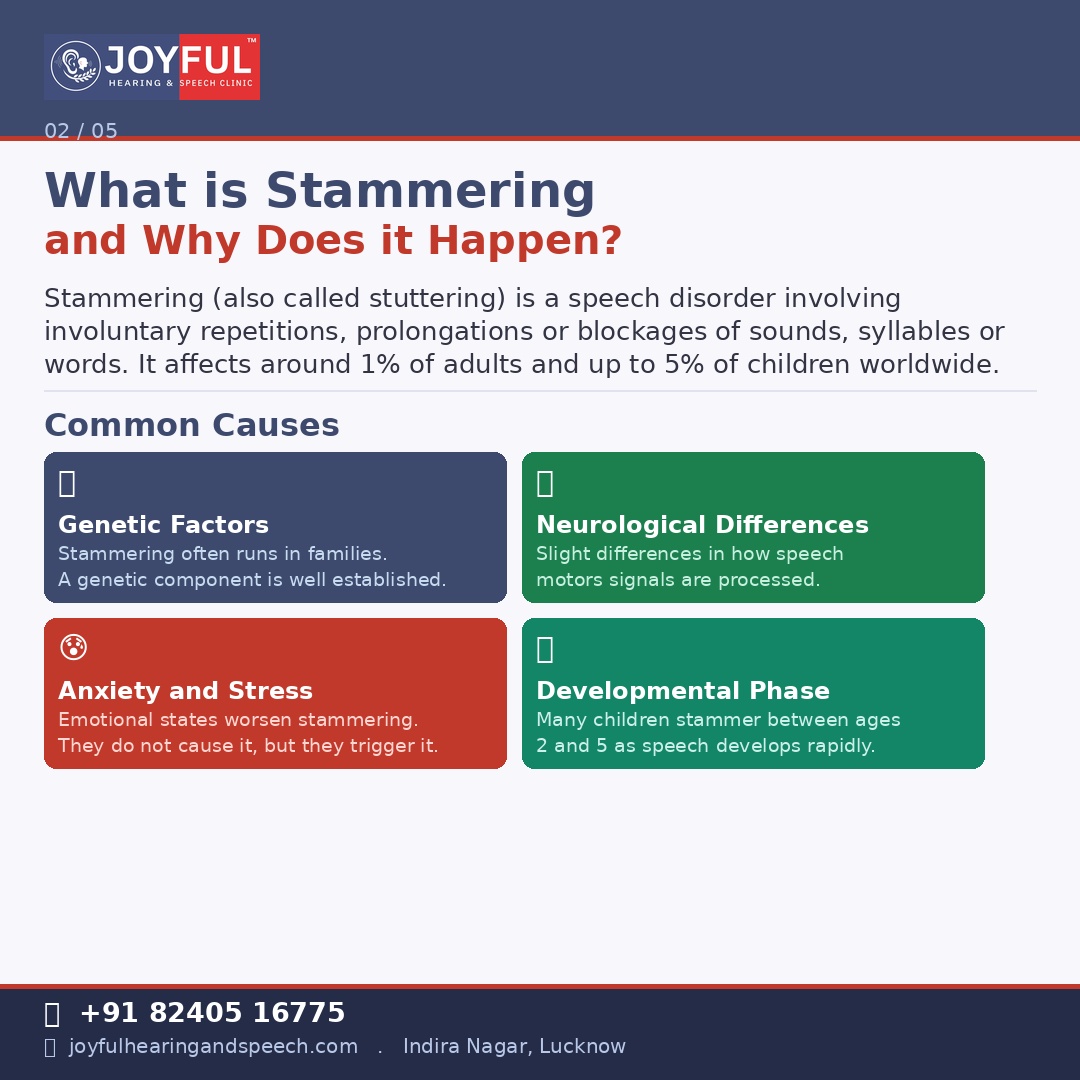
Stammering, also called stuttering, is a speech fluency disorder characterised by involuntary repetitions of sounds or syllables, prolongations of sounds, or complete blockages where the speaker cannot produce a sound at all. It affects around 1% of adults and up to 5% of children globally. It is more common in boys than girls and frequently first appears between the ages of two and five, when children are rapidly expanding their vocabulary and sentence structure.
What causes stammering?
Research has identified a strong genetic component: stammering runs in families. Neuroimaging studies show subtle differences in how the speech motor circuits are processed in people who stammer, particularly in the left hemisphere of the brain. Emotional factors such as anxiety, stress, and pressure to speak fluently do not cause stammering but they are well-established triggers that worsen the severity of episodes. Stammering is not caused by poor parenting, trauma, or low intelligence.
The myths that hold people back
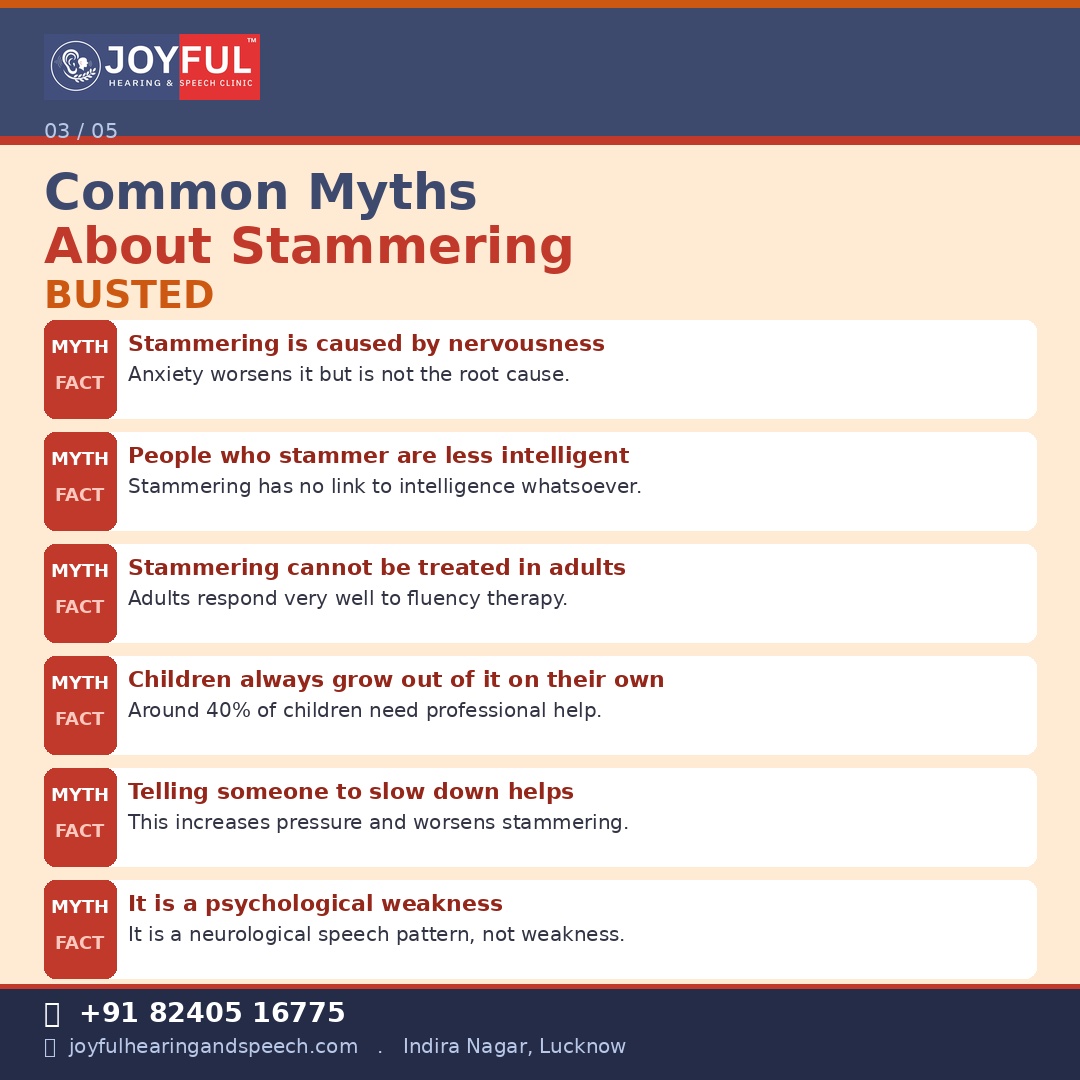
Perhaps the most damaging misconception is that stammering cannot be treated in adults. This is simply untrue. Adults of all ages respond meaningfully to fluency therapy. Another harmful myth is that telling someone to slow down or take a deep breath helps. In reality, such advice increases the speaker’s self-consciousness and makes stammering worse. Stammering is a physiological speech pattern, not a sign of weakness or reduced capability.
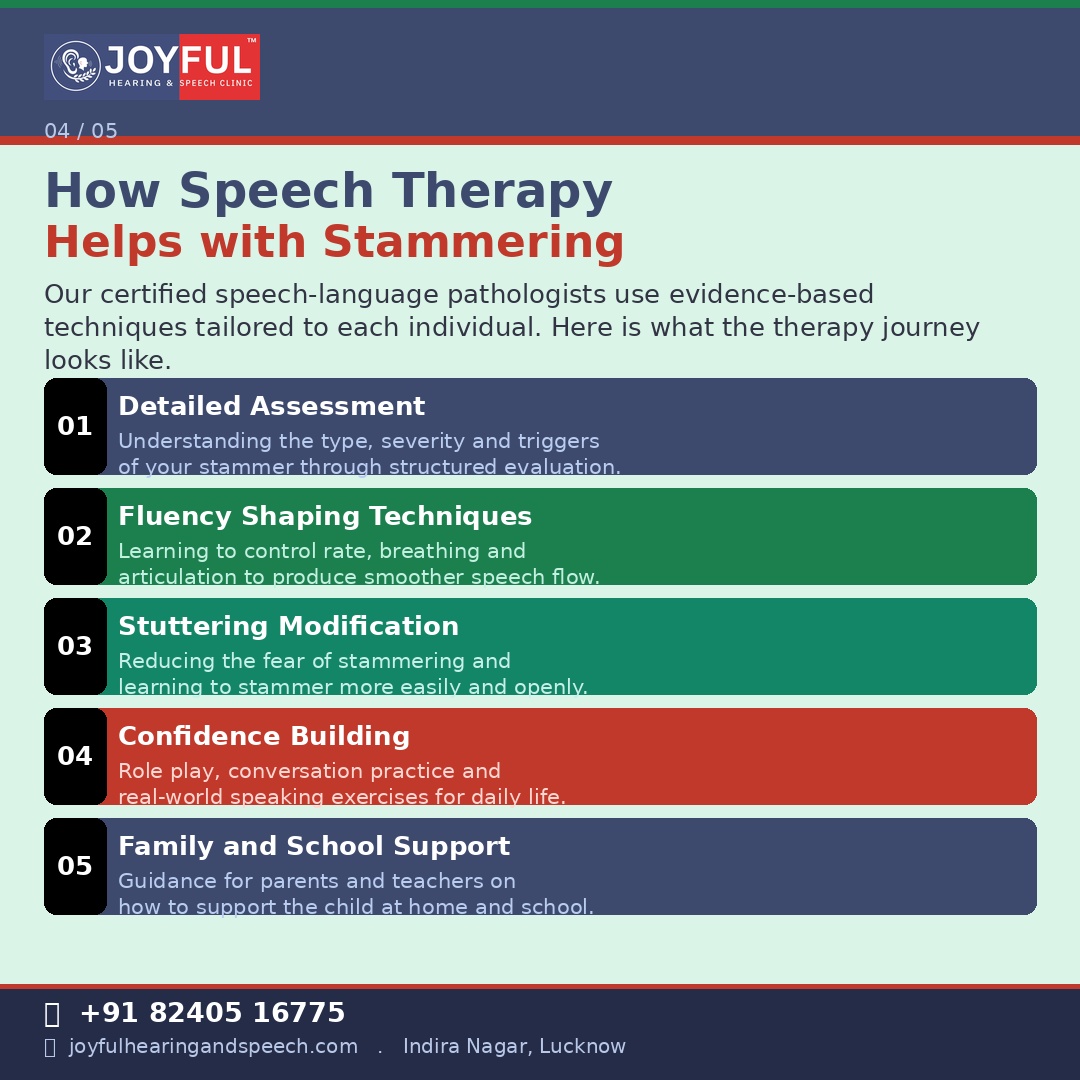
How does speech therapy help?
At Joyful Hearing and Speech Clinic, Lucknow, our certified speech-language pathologists work with children and adults using two main evidence-based approaches. Fluency shaping techniques teach individuals to modify their breathing, rate of speech and articulation patterns to produce smoother, more controlled speech from the outset. Stuttering modification therapy focuses on reducing the fear and avoidance associated with stammering, enabling people to stammer more openly and with less physical tension. Both approaches are complemented by real-world speaking practice, confidence-building exercises, and for children, guidance for parents and teachers on how to create a supportive communication environment.

The right time to seek help is now
Whether you are a parent concerned about your child’s fluency or an adult who has lived with stammering for years, evidence-based speech therapy can make a genuine difference.

Written By
Joyful Hearing Specialists
Clinical Audiologists & Speech Therapists