Is Tongue-Tie Behind Your Child's Unclear Speech? What Parents Should Know | Joyful Hearing & Speech Clinic
A relative watches your toddler stick out their tongue and says the tip looks heart-shaped, or that the tongue seems "tied". Since then, every unclear word has you wondering whether a small cut under the tongue would fix your child's speech. It is a common worry for parents, and the answer is usually more reassuring than you might expect.
What Is Tongue-Tie?
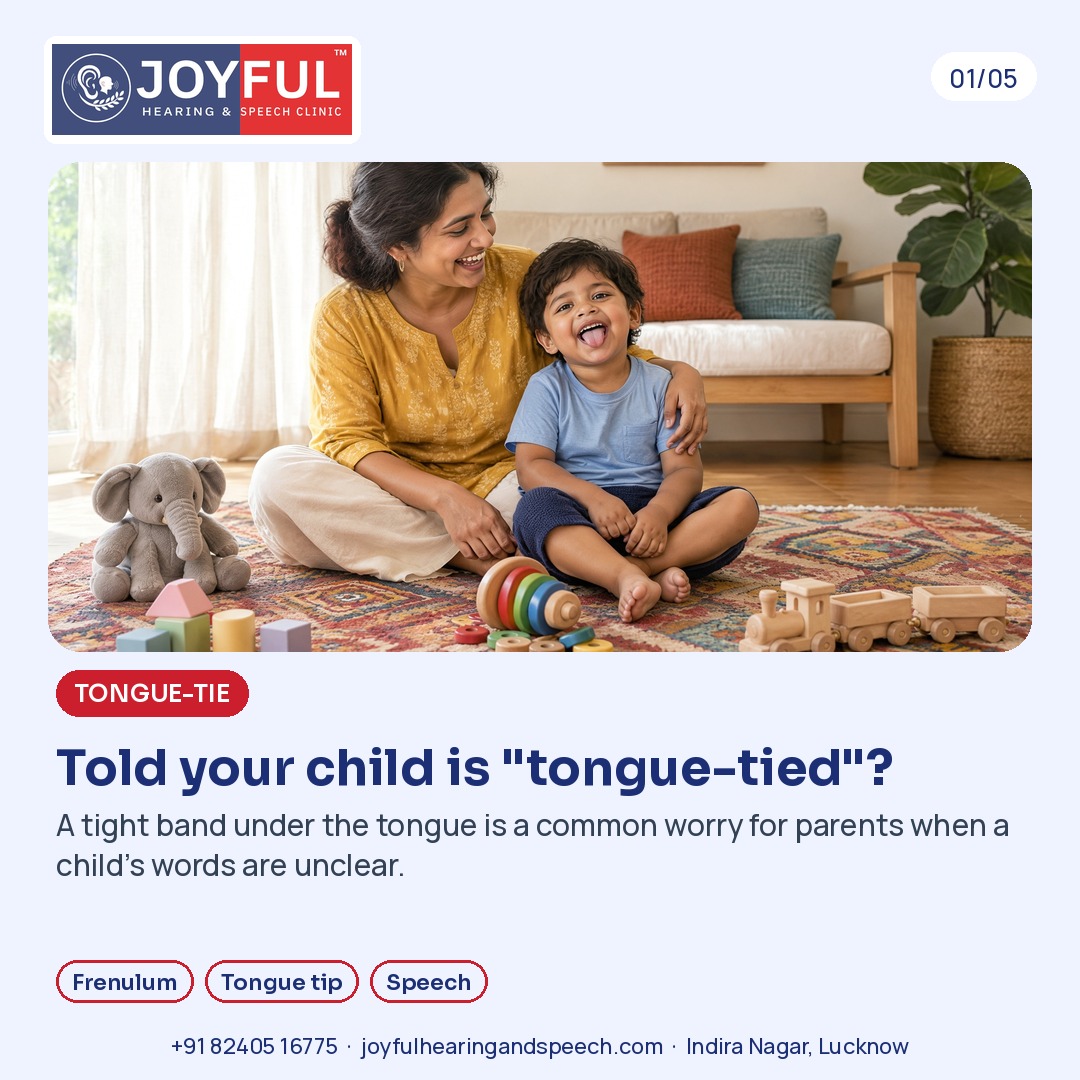
Under the tongue is a thin band of tissue called the frenulum. In tongue-tie, also called ankyloglossia, this band is shorter, tighter or attached nearer the tip than usual, so the tongue cannot move as freely. When your child sticks out their tongue, the tip may look notched or heart-shaped, and lifting the tongue to the roof of the mouth or moving it from side to side may be harder.
Tongue-tie is present from birth. In babies it sometimes makes breastfeeding difficult, which is often when it is first noticed. Many children with a mild tongue-tie have no problems at all.
Does Tongue-Tie Cause Speech Problems?
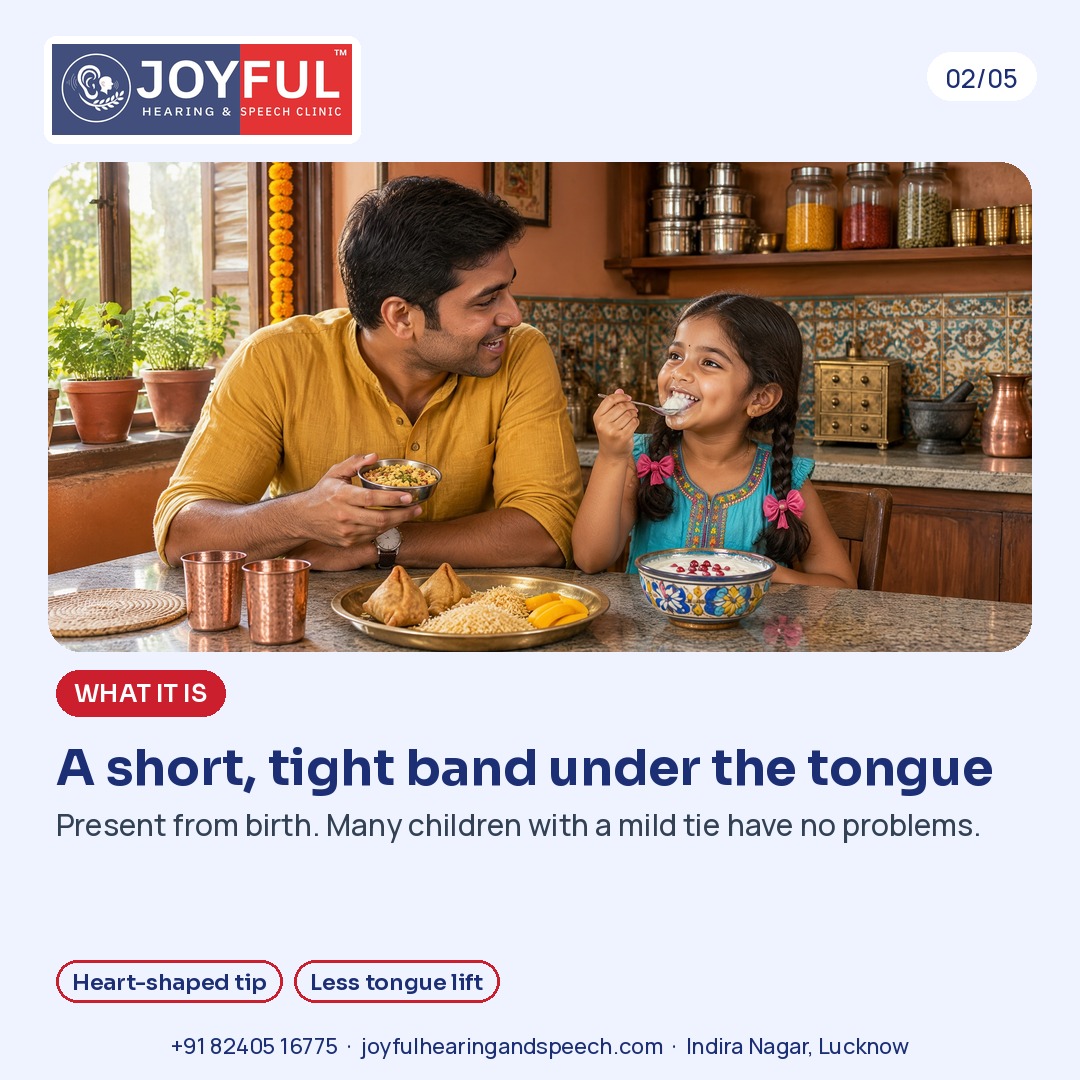
Tongue-tie does not cause late talking. Understanding words, saying first words and joining words together depend on language development and hearing, not on the frenulum. If your child has few words for their age, a speech and language assessment and a hearing test matter far more than the tongue.
Most children with tongue-tie learn to speak clearly. In some children with a tighter tie, sounds that need the tongue tip to lift, such as "t", "d", "n", "l" and "r", may be harder to make. Many young children find these sounds tricky as part of normal development anyway, so unclear speech alone does not prove that the tie is to blame.
When to Seek an Assessment and What Happens
Book a check if your child:
- Has few words or is not joining words for their age
- Is still hard for family to understand by about age 3
- Struggles to lift or move the tongue, or has trouble eating
- Seems upset or frustrated when speaking
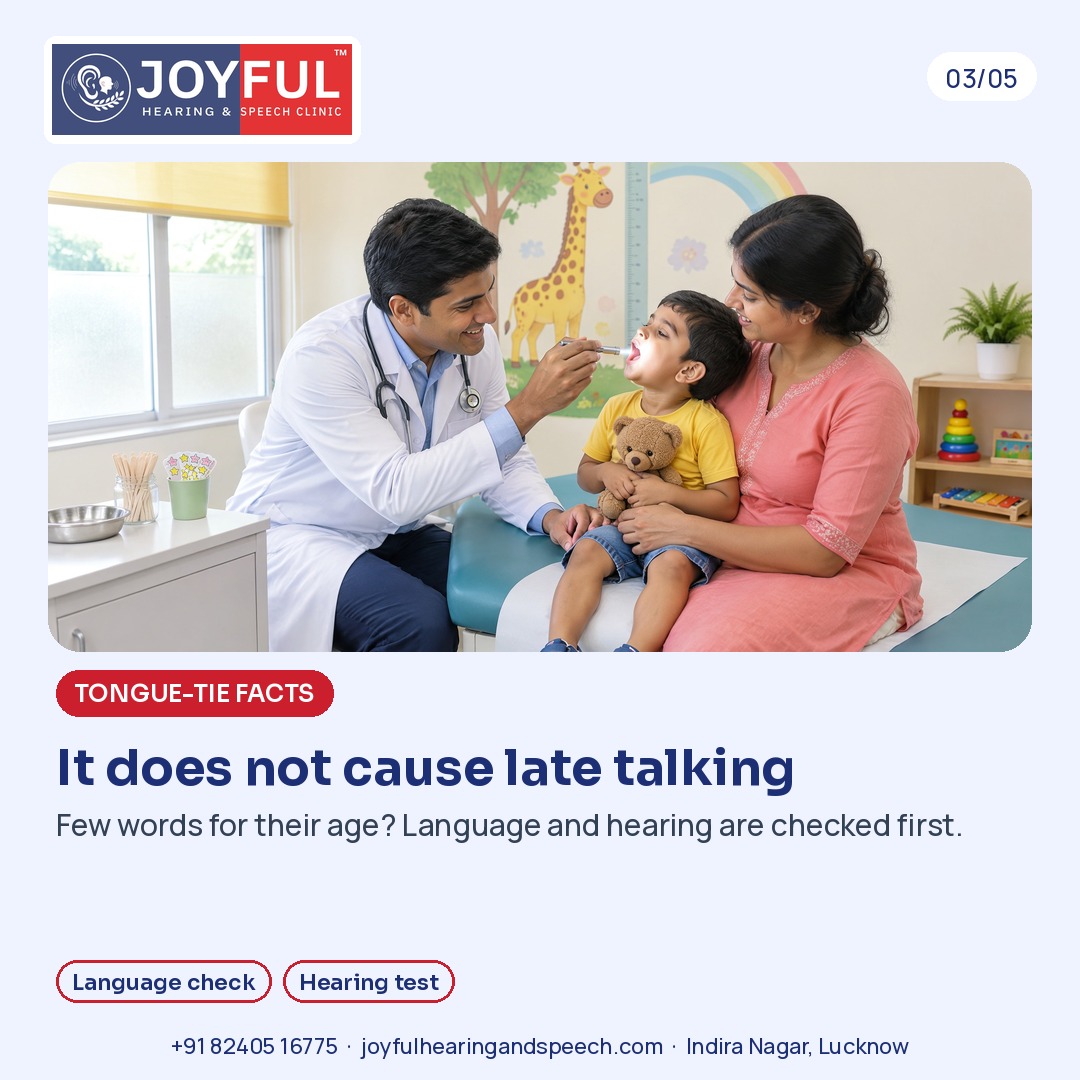
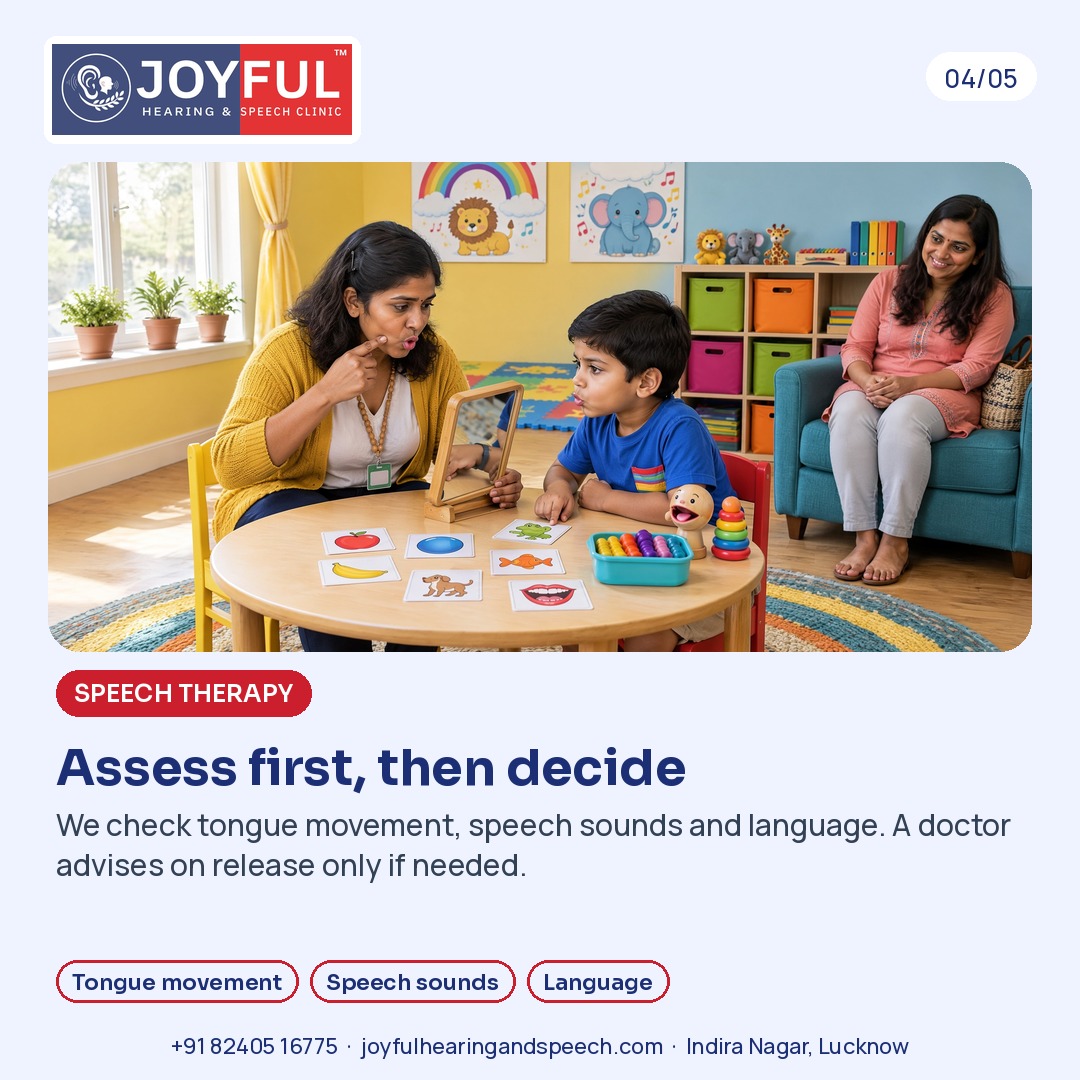
A speech therapist watches how your child's tongue, lips and jaw move during speech, eating and play, listens to the sounds they find hard and checks language skills. We often suggest a hearing test too, because hearing plays a big part in clear speech. If tongue movement seems truly limited, your child is referred to an ENT or paediatric doctor, who can advise whether a minor procedure to release the band would help. Even after a release, some children need speech therapy to practise new tongue movements, and for many children speech therapy alone is enough.
Book a Speech Assessment in Indira Nagar, Lucknow
Before deciding on any procedure for speech reasons, a full assessment gives you clear answers. At Joyful Hearing & Speech Clinic, Indira Nagar, Lucknow, we assess your child's tongue movement, speech sounds, language and hearing, explain what we find in simple terms and plan the next steps with you.
Call +91 82405 16775 or message us on WhatsApp to book an assessment. We are open Mon–Sat, 10:00 AM–7:00 PM.

Written By
Joyful Hearing Specialists
Clinical Audiologists & Speech Therapists