
Vertigo & Hearing Loss: The Inner Ear Connection Most People Miss

Do you ever feel the room spinning when you turn your head too fast? Or experience sudden dizziness so intense it knocks you off balance? Most people dismiss vertigo as "just dizziness"—but the truth is that the majority of vertigo cases originate deep inside your inner ear, the same structure responsible for your hearing. Understanding this connection could be the key to finding lasting relief.
What exactly is vertigo?
Vertigo is not simply feeling lightheaded—it is the distinct false sensation that you, or the world around you, is spinning or tilting. It is often accompanied by nausea, unsteady walking, and difficulty focusing. Unlike general dizziness, vertigo is a symptom, not a diagnosis, and its root cause must be identified for effective treatment.
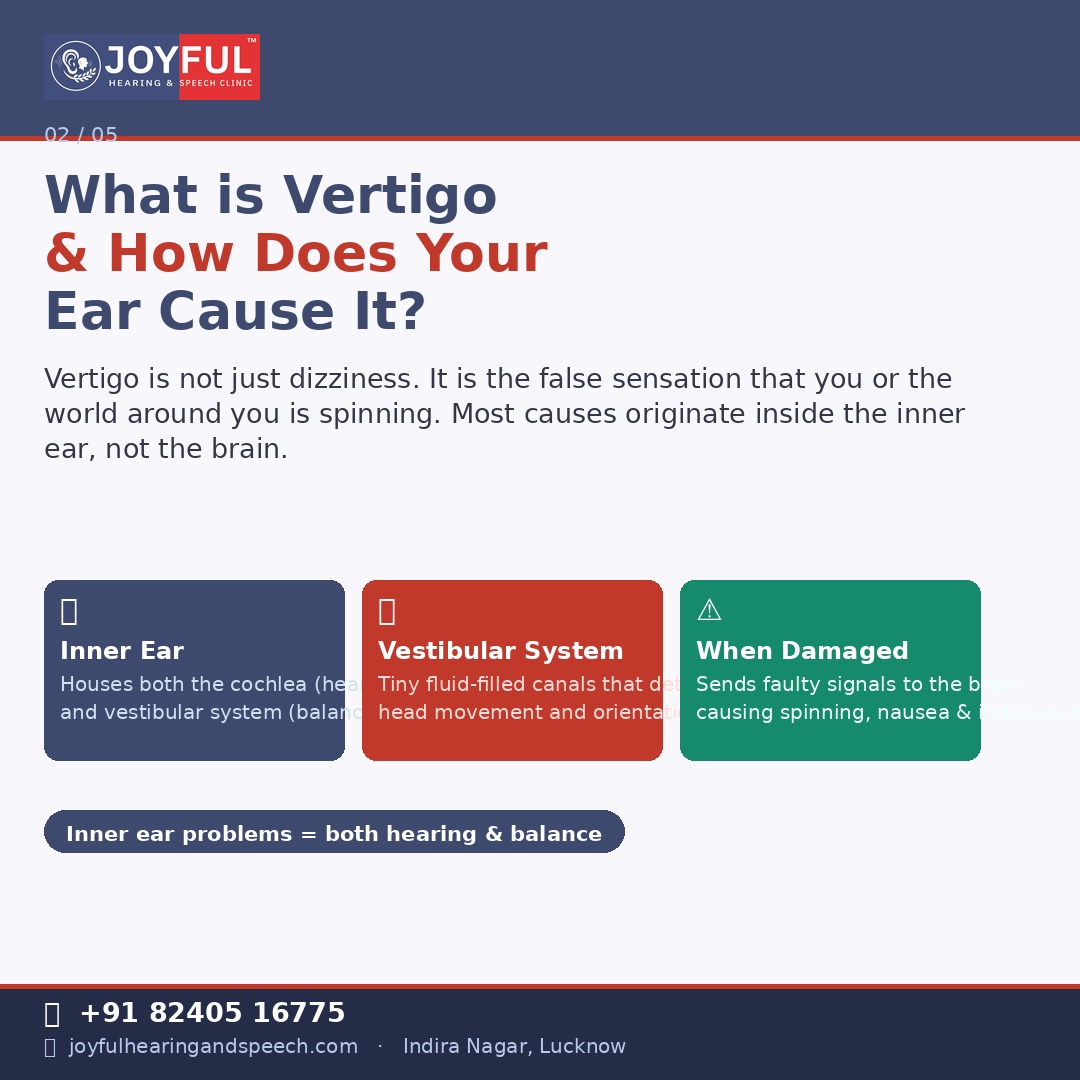
The inner ear: your hearing and balance headquarters
Your inner ear houses two critical systems: the cochlea, which processes sound for hearing, and the vestibular system—a network of fluid-filled canals that detect head movement and maintain your sense of balance. When either system is disrupted, you can experience problems with both hearing and equilibrium simultaneously. This is why vertigo and hearing loss so frequently occur together.
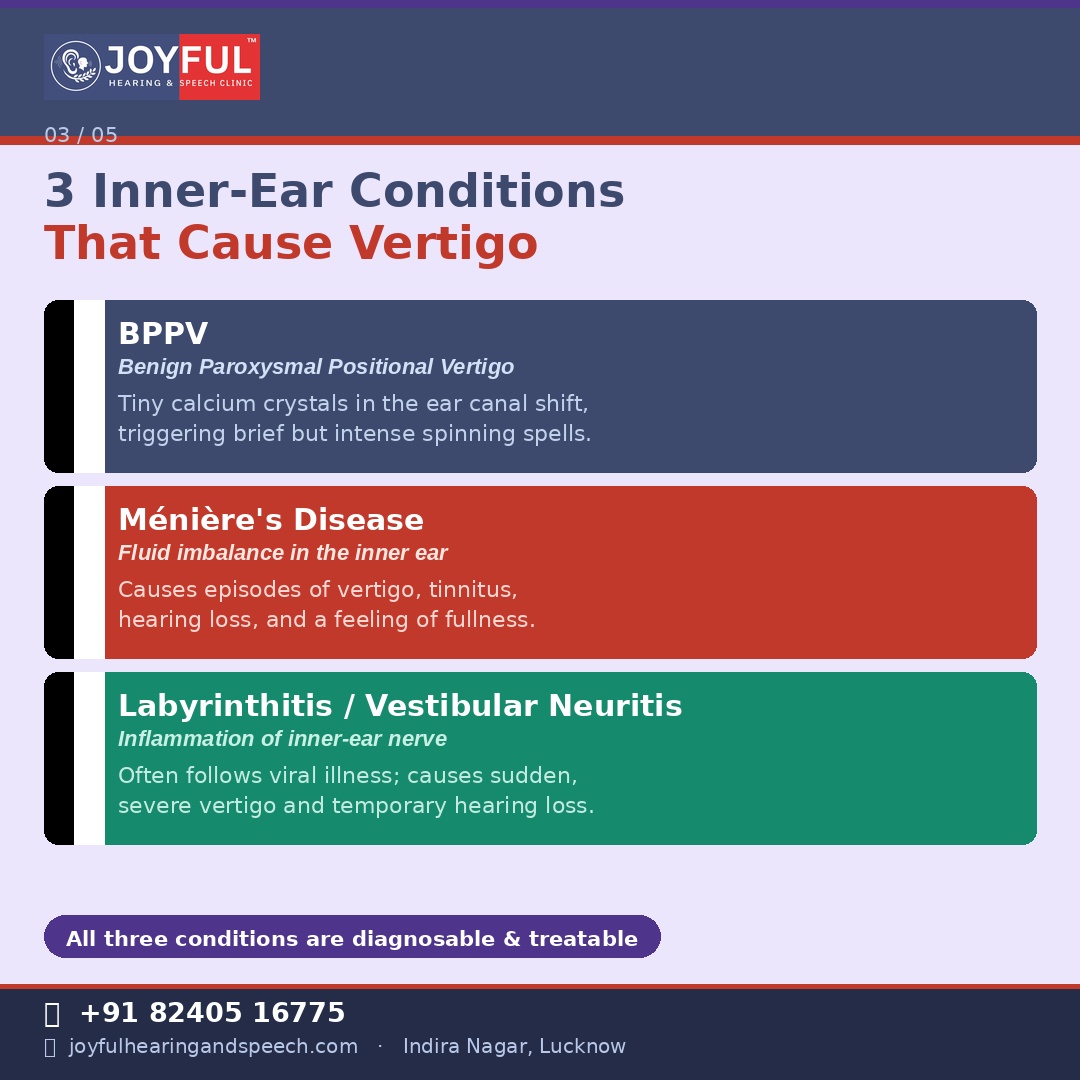
Three inner-ear conditions that cause vertigo
- BPPV (Benign Paroxysmal Positional Vertigo): The most common cause, where tiny calcium crystals dislodge and drift into the wrong canal, triggering brief but intense spinning.
- Ménière's Disease: Involves abnormal fluid pressure inside the inner ear, producing episodes of severe vertigo, fluctuating hearing loss in one ear, tinnitus, and a feeling of fullness.
- Labyrinthitis and Vestibular Neuritis: Often triggered by viral infections, these inflame the inner-ear nerve, causing sudden vertigo and temporary hearing deterioration.
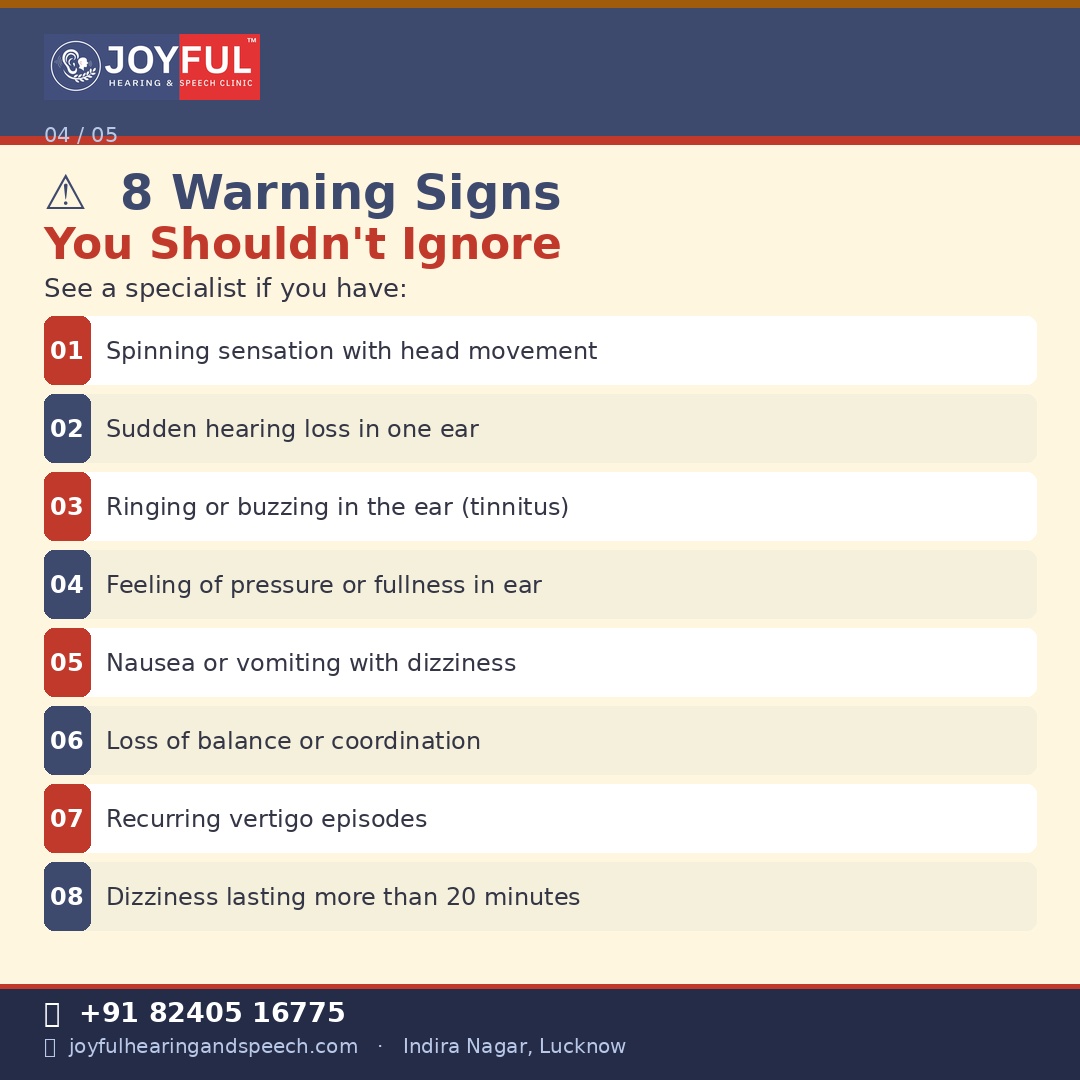
Warning signs you should never ignore
See an audiologist or ENT immediately if you experience vertigo lasting more than 20 minutes, sudden hearing loss alongside dizziness, recurring spinning episodes, tinnitus with balance problems, or nausea triggered by head movement. These are red flags for an inner-ear disorder that demands proper vestibular assessment.
How is it diagnosed and treated?
At Joyful Hearing and Speech Clinic, Lucknow, our audiologists perform comprehensive vestibular and hearing evaluations including audiometry, tympanometry, and BERA testing. For BPPV, the Epley manoeuvre provides rapid relief. Ménière's is managed through dietary changes, medication, and in some cases, hearing aids. Labyrinthitis responds well to vestibular rehabilitation exercises and medication.

You don't have to live with spinning
If vertigo is disrupting your daily life, your inner ear may be the answer—and we can help find it. Book a hearing and vestibular assessment in Lucknow at Joyful Hearing and Speech Clinic today.

Written By
Joyful Hearing Specialists
Clinical Audiologists & Speech Therapists